Turmeric Essential Oil for Joint Pain After 40 – Does It Actually Work?

Introduction: The Aches and Pains of the Forties
I was at the changing room in the gym the other day when I overheard two women talking about their post workout recovery. They were telling each other about their sudden pain and aches in their joints, shoulders, backs, morning stiffness and, in general, about their recovery being now slower and not the same. Both women were in the late 30s, maybe early 40s. And I was agreeing to what they were saying inside of my head while listening because I’ve been experiencing the same changes recently. Suddenly muscle soreness, joints, hip and back pain become part of your every day life and you need more time for the recovery between workouts to. The reason for that is biological changes that late 30s and early 40s women experience as they enter perimenopause followed by menopause. Hormonal imbalance created by this change often manifest as joint stiffness, muscle soreness, and prolonged recovery times after physical activity . Especially declining estrogen levels play a significant role, impacting everything from bone density to inflammation pathways, making the body more susceptible to discomfort .
As natural relief and essential oil lover I always look for the solutions that our nature can offer. So in this post I’d like to explore the benefits of Turmeric Essential Oil, which I’ve been using myself for a couple of months now. We will talk about what it is and how it differs from Turmeric supplements and powder, why it is good for muscle aches and whether it can actually help.
Turmeric Essential Oil: A Unique Powerhouse
When we talk about turmeric, many immediately think of the bright yellow powder used in cooking or the curcumin supplements widely available. But Turmeric Essential Oil is a distinct entity with its own unique profile and benefits.
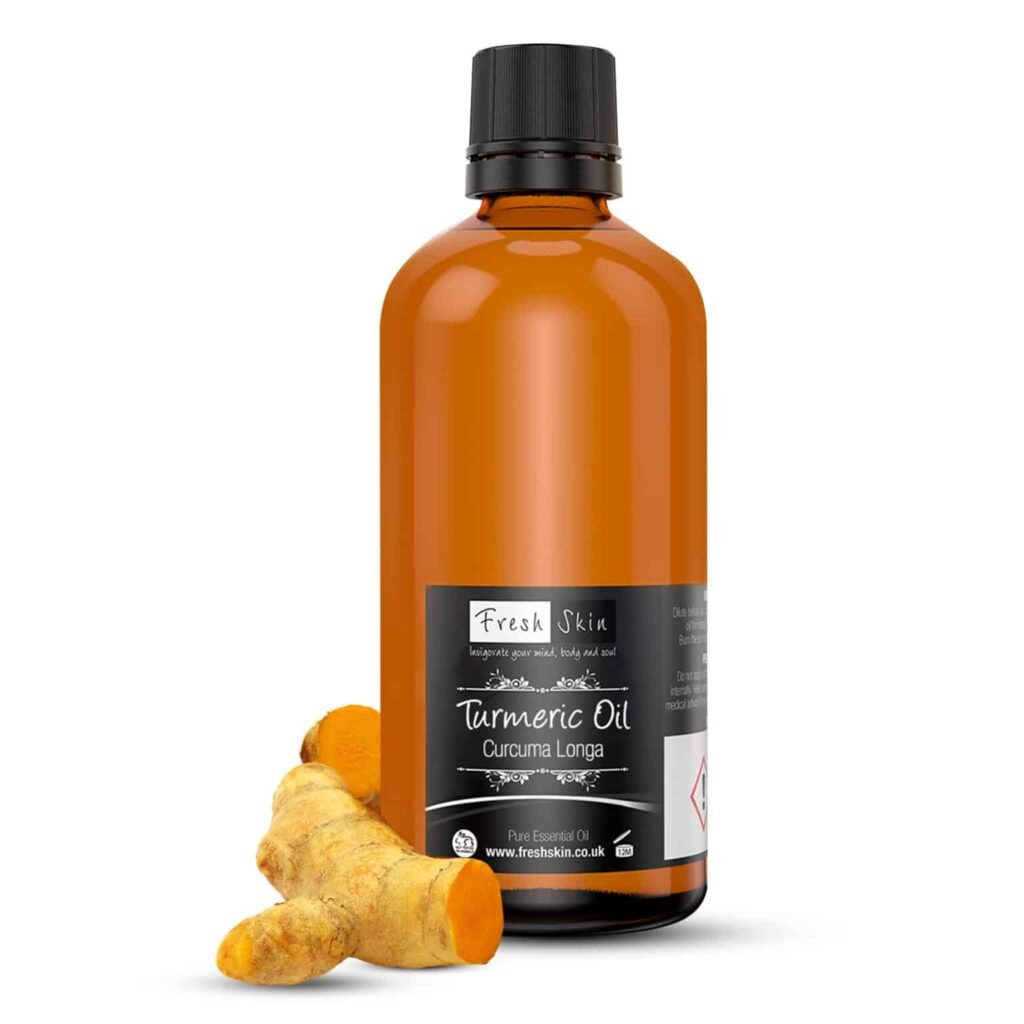
What is Turmeric Essential Oil?
Turmeric essential oil is derived from the plant’s rhizomes (underground stems) through processes like steam distillation or CO2 extraction. This method concentrates the volatile aromatic compounds of the plant, resulting in a highly potent oil. While curcumin is the most well-known active compound in turmeric, the essential oil contains a broader spectrum of beneficial molecules, including aromatic turmerone, alpha-turmerone, and curlone . These compounds work synergistically, contributing to the oil’s powerful therapeutic effects.
How is it Different from Curcumin Supplements and Powder?
| Feature | Turmeric Powder | Curcumin Supplements | Turmeric Essential Oil |
| Composition | Whole plant material, low curcumin content | Isolated curcumin, often standardized | Concentrated volatile compounds (turmerones, etc.) |
| Bioavailability | Poorly absorbed by the body | Enhanced absorption (often with piperine or lipids) | Potentially superior absorption due to turmerones |
| Primary Use | Culinary, general health | Targeted anti-inflammatory, antioxidant | Topical application, aromatherapy, synergistic effects |
| Potency | Mild | Moderate to High | High (highly concentrated) |
| Application | Oral (food), some topical | Oral | Topical, aromatic |
One of the key advantages of Turmeric Essential Oil is its potential for enhanced bioavailability. Some research suggests that the turmerones present in Turmeric essential oil can improve the absorption of curcumin, leading to a more effective delivery of its beneficial compounds to the body . This means you might experience more pronounced effects compared to consuming turmeric powder or even some curcumin supplements alone.
Why Choose Turmeric Essential Oil for Joint Pain After 40?
For women over 40, the choice of remedy for joint and muscle pain is crucial. Turmeric Essential oil stands out for several reasons:
Potent Anti-Inflammatory Action: The turmerones in the essential oil are powerful anti-inflammatory agents. Inflammation is a primary driver of joint pain and stiffness, especially as we age and hormonal changes occur . By targeting inflammation, the oil can help reduce discomfort and improve mobility.
Targeted Topical Relief: Unlike oral supplements that work systemically, Turmeric essential oil can be applied directly to the area of concern. This allows for localized relief, making it ideal for specific joint pain or muscle soreness.
Synergistic Benefits: The complex chemical profile of the essential oil means it offers a broader range of therapeutic actions than isolated curcumin. This holistic approach can address various aspects of pain and recovery.
Natural and Holistic: For those seeking natural alternatives, Turmeric essential oils offer a way to support the body’s healing processes without relying solely on pharmaceuticals.
How Turmeric Essential Oil Helps: The Science-Backed Benefits
The science behind turmeric’s efficacy in managing pain and inflammation is robust, and these benefits extend to its essential oil form:
Combating Inflammation: The primary mechanism by which Turmeric Essential Oil helps with joint and muscle pain is its ability to modulate inflammatory pathways. Compounds like turmerone have been shown to inhibit pro-inflammatory enzymes and cytokines, effectively reducing the inflammatory response in the body . This is particularly beneficial for conditions like osteoarthritis and general age-related inflammation.
Antioxidant Power: Oxidative stress contributes to cellular damage and inflammation. Turmeric essential oil is rich in antioxidants, which help neutralize free radicals, protecting cells and tissues from damage and further reducing inflammation .
Pain Relief: By reducing inflammation and oxidative stress, Turmeric essential oil can directly alleviate pain. Studies on turmeric extracts have shown significant reductions in knee pain and improved physical function in individuals with osteoarthritis . While most human studies focus on curcumin-rich extracts, the anti-inflammatory properties of the essential oil suggest similar pain-relieving potential when applied topically.
Addressing Morning Stiffness: Many women over 40 experience morning stiffness, a common symptom of inflammation and reduced joint lubrication. Regular application of Turmeric Essential oil can help reduce this stiffness by promoting circulation and calming inflammatory responses in the joints and muscles, leading to greater ease of movement throughout the day.
Turmeric Essential Oil and Post-Workout Recovery After 40
For women over 40, post-workout recovery isn’t what it used to be. Hormonal shifts, particularly the decline in estrogen, can lead to several challenges:
Slower Muscle Repair: Estrogen plays a role in muscle repair and regeneration. With lower levels, muscles may take longer to recover from exercise-induced micro-tears, leading to prolonged soreness .
Increased Inflammation: The body’s inflammatory response can be heightened, meaning more swelling and discomfort after a strenuous workout .
Reduced Protein Synthesis: Muscle protein synthesis, crucial for muscle growth and repair, can become less efficient with age, further impacting recovery .
This is where Turmeric Essential Oil can provide crucial support. Its anti-inflammatory properties can help mitigate the heightened inflammatory response, while its ability to promote circulation can aid in nutrient delivery and waste removal, accelerating the healing process . Incorporating it into a post-workout massage can help alleviate delayed-onset muscle soreness (DOMS) and facilitate faster recovery .
How to Use Turmeric Essential Oil
Topical application is the most common and effective way to use Turmeric Essential Oil for joint and muscle pain. However, essential oils are highly concentrated and must always be diluted before applying to the skin.
Dilution Guidelines
Essential oils are highly concentrated and must always be diluted before skin contact. For Turmeric essential oil specifically, staying within safe dilution limits matters — it has mild sensitisation potential with repeated use at higher concentrations.
Recommended dilutions for adults:
Always patch test a new blend on the inner arm 24 hours before wider use
1–2% for regular daily use, large surface areas, or sensitive skin — approximately 6–12 drops per 30ml of carrier oil
2–3% for targeted, short-term use on a specific joint or small area — approximately 12–18 drops per 30ml
Choosing a Carrier Oil As a Base for a Blend
A good carrier oil usually does three jobs. First, it safely dilutes the essential oils so they can be massaged over a large area without irritation. Second, it provides a good glide during an application process called massage. Hence its texture and absorption rate shape that process very much. For muscle work specifically, you generally want a carrier with reasonable “slip” — enough glide for the hands to move smoothly over a larger surface without dragging — that still absorbs within a sensible time so the skin doesn’t stay greasy for an hour afterwards. Third, a carrier oil can contribute its own bioactive compounds: certain fatty acids, antioxidants and plant sterols. Which in turn can multiply the benefit of the treatment.
Arnica-infused oil: Strictly an infusion rather than a true carrier, arnica-infused oil (usually arnica flowers steeped in sunflower or olive oil) is a traditional first choice for bruising, knocks and overworked muscles. The helenalin compounds in arnica are valued for easing localised inflammation. It blends well with stronger essential oils and is best kept to unbroken skin.
Sweet almond oil: The dependable all-rounder. Sweet almond has excellent slip, a long working time and a mild, almost neutral scent that lets the essential oils lead. Rich in oleic acid, it nourishes the skin without feeling heavy. If you want one affordable, easy-to-find base for general massage blends, this is it — though it isn’t suitable for anyone with a nut allergy.
Grapeseed oil: Light, fast-absorbing and almost odourless, grapeseed is the carrier to choose when you want minimal residue — useful for daytime application or before dressing. Its high linoleic acid content gives it a gently soothing quality, though that same unsaturation means it doesn’t keep as long as more stable oils.
Black Seed Oil: This oil is the standout because of thymoquinone, its principal bioactive compound. Thymoquinone is the focus of a great deal of research into the plant’s anti-inflammatory and antioxidant activity. It is this constituent, alongside a fatty-acid profile dominated by linoleic and oleic acids, that gives black seed oil its soothing character on tired, overworked tissue. Because of its assertive aroma and richer texture, black seed oil is often best used as part of a blend rather than on it own.
Application Methods
Direct Massage: Dilute the essential oil in your chosen carrier oil and gently massage into the affected joints or muscles. Use circular motions to promote absorption and circulation.
Compress: Add 4–6 drops of Turmeric essential oil to a teaspoon of carrier oil or whole milk to help disperse it, then stir into a bowl of warm water. Soak a clean cloth in the mixture, wring out the excess, and hold it against the affected area for 10–15 minutes. The warmth helps the anti-inflammatory compounds absorb more deeply into the tissue beneath.
Bath Soak: Mix 5-10 drops of diluted Turmeric Essential Oil with a tablespoon of Epsom salts or a bubble bath to for a full-body soothing experience.
DIY Turmeric Essential Oil Recipes for Joints and Muscles Pain

Morning Stiffness & Joint Comfort Blend
This blend aims to reduce inflammation and improve flexibility, making those first movements of the day easier.
Ingredients:
15 drops Turmeric Essential Oil
10 drops Frankincense Essential Oil (known for joint support and cellular health)
5 drops Ginger Essential Oil (warming, pain-relieving)
60ml Arnica Carrier Oil
Instructions: Combine all the ingredients in a 60 ml dark glass bottle. Shake gently before each use. Apply to stiff joints every morning and evening.
Post-Workout & Menopause Muscle Recovery Rub
Designed to soothe tired muscles and aid in faster recovery after physical activity, while also addressing general muscle soreness associated with menopause.
Ingredients:
15 drops Turmeric Essential Oil
15 drops Lavender Essential Oil (calming, muscle relaxing)
5 drops Peppermint Essential Oil (cooling, pain-relieving)
Instructions: Combine all the ingredients in a 60 ml dark glass bottle and shake well. Massage generously onto sore muscles immediately after a workout or whenever muscle tension arises.
Frequently Asked Questions About Turmeric Essential Oil for Joint Pain
Does Turmeric essential oil actually contain curcumin?
Not in any meaningful amount. Turmeric essential oil is produced by steam distillation, which captures the plant’s volatile aromatic compounds — primarily turmerones — rather than curcumin, which is a non-volatile curcuminoid. This is why Turmeric EO and curcumin supplements work through different mechanisms and are not interchangeable. The good news is that turmerones have their own well-documented anti-inflammatory properties, making the essential oil genuinely useful in its own right.
Can I use Turmeric essential oil neat directly on my skin?
No. Turmeric essential oil is highly concentrated and should always be diluted in a carrier oil before skin contact. Using it neat risks skin irritation and sensitisation — meaning your skin can become increasingly reactive to it over time, even if it seems fine initially. A 2–3% dilution in a carrier oil is appropriate for most adults for targeted use on joints and muscles.
How long does it take for Turmeric essential oil to work on joint pain?
There is no instant fix, and anyone promising one is overselling it. Most people who use Turmeric EO consistently as part of a daily self-care routine report noticeable improvement in stiffness and general comfort within two to four weeks. It works best used regularly rather than occasionally — think of it as a cumulative support rather than a one-off treatment.
What is the best carrier oil to use with Turmeric essential oil for joint pain?
It depends on what you need. For post-workout muscle soreness, Black seed oil is an excellent choice because its active compound thymoquinone adds its own anti-inflammatory action to the blend. Arnica-infused oil is the traditional first choice for morning stiffness and joint aches. For everyday use or if you prefer something lighter, Sweet almond or Grapeseed oil work well and are easy to find. See the carrier oil section above for a full breakdown.
Will Turmeric essential oil stain my skin?
At the dilutions recommended in this post — 1 to 3% — visible skin staining is unlikely. However, turmeric in any form has staining potential, so take care around light fabrics and wash hands thoroughly after applying. Avoid using on areas where any discolouration would be particularly noticeable without testing on a small area first.
Can I use Turmeric essential oil alongside curcumin supplements?
Yes, and it is actually a sensible combination. Topical Turmeric essential oil works locally on the area you apply it to, while oral curcumin supplements work systemically through the bloodstream. The two mechanisms are complementary rather than overlapping. If you add a curcumin supplement, look for one that includes black pepper extract (piperine) to improve absorption significantly.
Final Thoughts
For women over 40 navigating the shift in how their body feels, turmeric essential oil is a genuinely useful addition to a natural self-care routine. It won’t fix structural joint damage or replace medical treatment, but used consistently and correctly, it may help soften the edges of everyday discomfort and support recovery after exercise.
I’ve been using it myself for a couple of months now. Just a few drops in my evening moisturiser and I find it genuinely grounding. The joint comfort is noticeable and the sleep improvement has been an unexpected bonus.
If you want to boost the anti-inflammatory effect further, taking a quality curcumin supplement orally alongside your topical essential oil is worth considering. The two work through different but complementary mechanisms.
Have you tried turmeric essential oil? I’d love to know how you get on — leave a comment below.
Disclaimer: This post contains affiliate links. If you purchase through these links, I may earn a small commission at no extra cost to you — it helps me keep creating free content. I only ever recommend products I personally use and trust. This information is for educational purposes only and is not intended to diagnose, treat, cure, or prevent any disease. Always patch test new ingredients, and consult with a healthcare provider if you have specific skin conditions or concerns. If you’re pregnant, nursing, or on medication, check with your doctor before using essential oils.