You’ve Been Using the Wrong Frankincense Oil All This Time. And Why This Matters for Skincare & Anti-Ageing
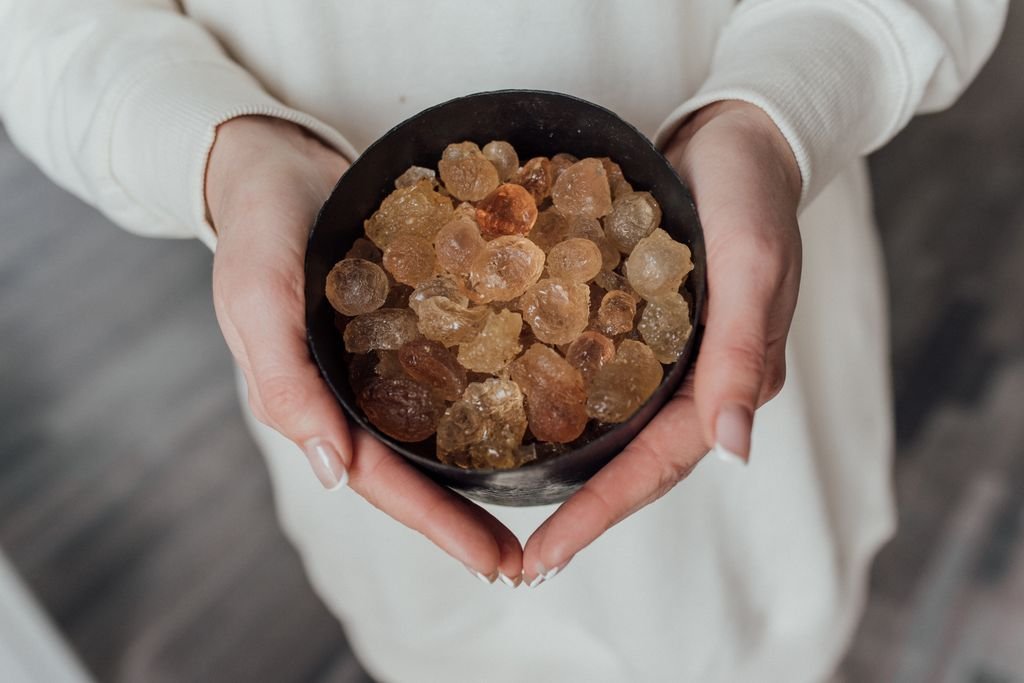
Scroll through any skincare forum or TikTok routine and you will eventually run into someone talking about how amazing Frankincense is and how many great benefits it has. Often dubbed the “King of Oils,” this ancient botanical resin is highly praised by wellness influencers for its supposed ability to apparently erase wrinkles, lift sagging jawlines and in general, completely rejuvenate the skin.
Frankincense has long been revered in natural skincare for its remarkable ability to rejuvenate and revitalise the complexion. It’s often praised for supporting collagen production, reduce the appearance of fine lines and wrinkles, soothe irritated skin, and promote an even skin tone. But to truly harness these benefits, especially for anti-aging, the type of frankincense you use makes a world of difference.
People who swear by Frankincense essential oil, especial when it comes to combat signs of ageing, attribute its powerful properties to boswellic acid, a component of the botanical resin from which Frankincense essential oil is extracted. But here’s where it gets interesting and where most beauty content gets it wrong. Because guess what! Boswellic acid compounds are largely absent from the steam-distilled essential oil which majority of the times are showed and recommended to you, because their molecules are too large to evaporate during distillation.
And this is exactly where most of us — myself included — have been getting it wrong. That’s why in this post we’re going to explore the world of frankincense more deeply: how each type — distilled oil and CO₂ extract — is made, what makes them unique, what benefits they offer, and how to choose the right one for your specific needs.
What Is Frankincense and What Is Inside?
Frankincense is an aromatic resin harvested from trees of the genus Boswellia, most notably Boswellia sacra, Boswellia carterii, and Boswellia frereana, which grow primarily in arid regions of the Horn of Africa (Somalia, Ethiopia), the Arabian Peninsula (Oman, Yemen), and parts of India.
When the bark of these trees is cut, they exude a milky white sap as a defensive response. This sap dries in the air over several days, hardening into amber, yellow, or brownish “tears” or droplets. This hardened resin is what’s traditionally called frankincense and it’s also known as olibanum. That resin is the raw material used to produce both, Steam-Distilled Frankincense Oil and Frankincense CO2 Extract. Frankincense resin contains a complex mixture of compounds, broadly falling into a few categories:
Volatile aromatic compounds
These are the lighter molecules that steam distillation captures, responsible for frankincense’s characteristic scent. The main groups include:
- Monoterpenes — such as α-pinene, limonene, and α-thujene, which give frankincense its fresh, slightly citrusy, woody top notes
- Sesquiterpenes — heavier aromatic molecules contributing to the deeper, woody-balsamic base notes
- Diterpenes — present in smaller amounts, contributing to the resinous character
Resin acids (non-volatile)
- Boswellic acids — a group of pentacyclic triterpenic acids (including alpha- and beta-boswellic acid, and others like AKBA — acetyl-11-keto-beta-boswellic acid) that are the most studied compounds from frankincense of particular interest for skin and topical applications
- Other triterpenoids and related resin acids
Steam-Distilled Vs CO2 Extract: Are They The Same?
No, distilled Frankincense essential oil and Frankincense CO₂ extract are related, but distinct products. Both are made from the same initial raw product, but their extraction method, components and even smell differ significantly.
What Is Steam-Distilled Frankincense Oil?
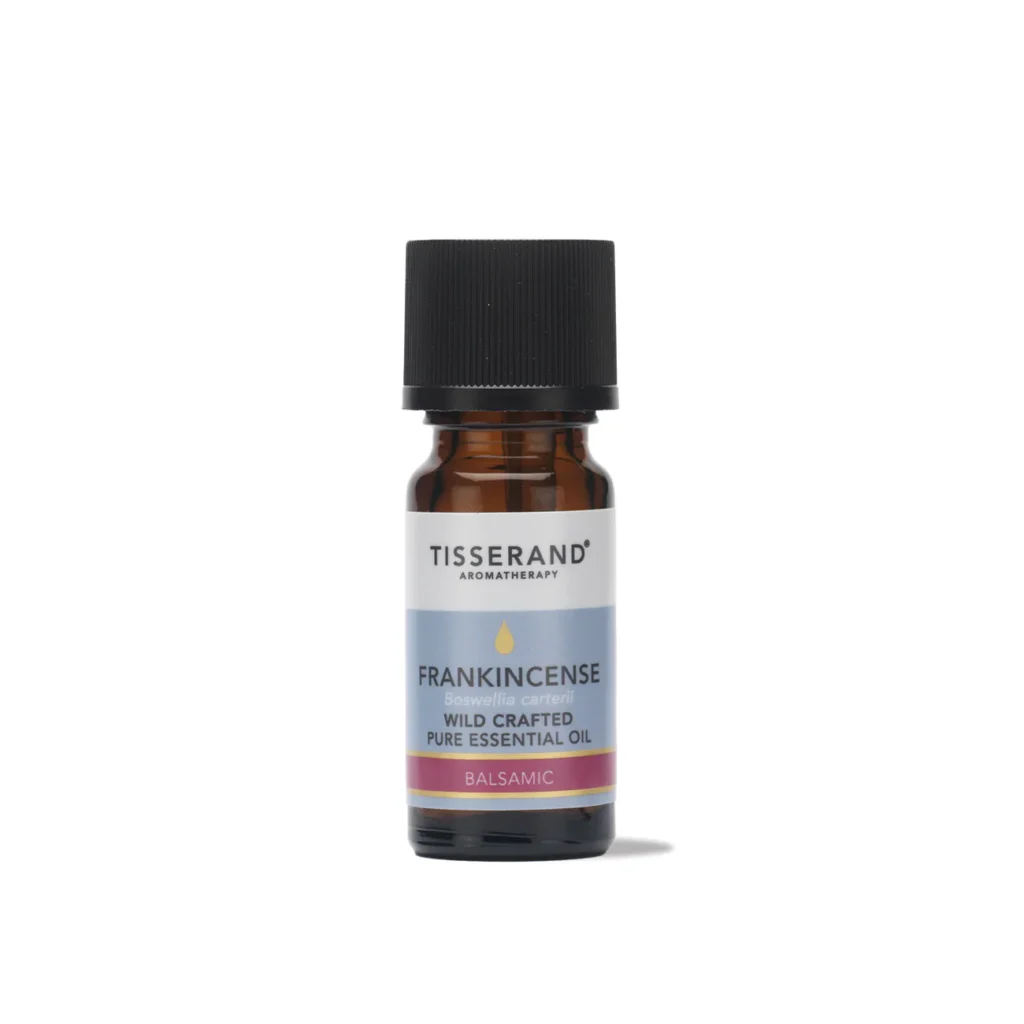
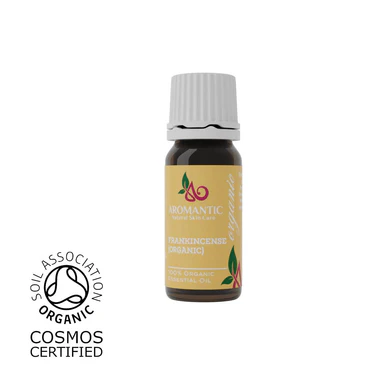
When most people think of Frankincense essential oil, they’re likely picturing the steam-distilled variety. This traditional method has been used for centuries to extract aromatic compounds from plants. Here’s how it works.
Dried Frankincense resin (typically from Boswellia carterii, sacra, frereana, or serrata) is placed in a still. Steam is then passed through the resin, causing the volatile aromatic molecules to vaporise. This vapour carrying the precious essential oil is then cooled and condensed back into a liquid. Because oil and water don’t mix, the essential oil separates and floats on top of the water (known as hydrosol), allowing it to be collected.
Steam distillation primarily extracts the lighter, more volatile components of the resin. These include monoterpenes like alpha-pinene, limonene, and sabinene, which are responsible for Frankincense’s characteristic warm, woody, slightly citrusy, and sometimes peppery aroma. These volatile compounds are excellent for influencing mood, promoting relaxation, and supporting respiratory health through inhalation.
What Is Frankincense CO₂ Extract?
Frankincense CO₂ extract represents a more modern and sophisticated extraction technique that offers a different, often more comprehensive, profile of the plant’s beneficial compounds. This method is called supercritical CO₂ extraction.
In simple terms, carbon dioxide (CO₂) is subjected to high pressure and a specific temperature, transforming it into a “supercritical” fluid. In this state, CO₂ possesses properties of both a liquid and a gas, allowing it to penetrate the frankincense resin like a gas while dissolving compounds like a liquid. This supercritical CO₂ then acts as a solvent, gently extracting a wider range of compounds from the resin, including those that are too heavy or non-volatile to be captured by steam distillation.
One of the most significant advantages of CO₂ extraction is its ability to capture heavier resin components, most notably boswellic acids and related triterpenes. These compounds are largely absent or present in only trace amounts in steam-distilled essential oils because they are not volatile enough to be carried by steam. Boswellic acids are highly regarded in scientific research for their potent anti-inflammatory and skin-rejuvenating properties, making Frankincense CO₂ extract particularly valuable for targeted therapeutic applications.
Side-by-Side Comparison Table
To help you visualize the key differences, here’s a comparison of distilled Frankincense oil versus Frankincense CO₂ extract:
| Feature | Steam-Distilled Frankincense Oil | Frankincense CO₂ Extract |
| Extraction Method | Steam distillation | Supercritical CO₂ extraction |
| Heat Used | High heat (steam) | Low to moderate heat |
| Chemical Profile | Primarily volatile monoterpenes (alpha-pinene, limonene) | Broader spectrum, including volatile compounds AND heavier resin components (e.g., boswellic acids) |
| Boswellic Acids | Absent or in trace amounts | Present in significant amounts |
| Aroma | Lighter, warm, woody, slightly citrusy | Richer, deeper, more resinous, closer to raw resin |
| Texture | Thin, mobile liquid | Thicker, sometimes viscous, can be waxy at lower temperatures |
| Best for Aromatherapy | Yes, traditional calming and uplifting effects | Yes, for a richer, more complex aromatic experience |
| Best for Skincare | General soothing, aromatic benefits | Targeted anti-aging, soothing, collagen support (due to boswellic acids) |
| Common Label | Frankincense Essential Oil, Steam Distilled | Frankincense CO₂ Extract, CO₂ Select, Supercritical CO₂ |
Why This Matters for Skincare & Anti-Aging
The key lies in those heavier resin-active compounds: boswellic acids. Research suggests that boswellic acids possess potent anti-inflammatory properties and may play a role in protecting skin cells and supporting their healthy function. These are the compounds believed to contribute significantly to Frankincense’s ability to promote skin elasticity, firmness, and overall youthful appearance. And this is where most skincare marketing quietly falls apart because Standard steam-distilled Frankincense essential oil contains absent or present only in trace amounts of boswellic acid. In other words, If you are treating your skin with a standard, steam-distilled Frankincense essential oil, you are simply enjoying a lovely aromatherapeutic ritual. It will refresh your senses and offer mild, surface-level conditioning, but it cannot fundamentally reverse the deep, structural signs of ageing.
But if you choose a Frankincense CO₂ Extract instead, you are introducing a genuinely powerful, well researched weapon to your skincare routine that addresses the two primary biological drivers of skin ageing, inflammaging and oxidative stress simultaneously.
How to Spot the Difference When Buying
As you see, navigating the world of Frankincense products can be confusing, but knowing what to look for will empower you to make informed choices. Here’s how to spot the difference between Frankincense distilled vs CO₂ when you’re shopping:
Look for specific terminology:
•For Distilled Frankincense Oil: Labels will typically state “Frankincense Essential Oil,” often followed by “Steam Distilled” or simply “Essential Oil.” The botanical name, such as Boswellia carterii essential oil will also be present.
•For Frankincense CO₂ Extract: Look for phrases like “Frankincense CO₂ Extract,” “CO₂ Select,” or “Supercritical CO₂ Extract.” These terms explicitly indicate the extraction method.
Practical Tips for Using Each Type
- Great for diffusers and personal inhalers.
- Dilute well in a carrier oil before applying to skin.
- A few drops go a long way in facial oil blends, primarily for scent and a soothing feel.
- Often sold in small amounts and used at low percentages within formulations. Follow the brand’s recommended usage rates closely as concentration can vary.
- Works well blended into facial oils, balms, or creams aimed at mature or stressed skin.
- Because texture can be thicker, it may need gentle warming to blend smoothly into a formulation.
For both: Always dilute appropriately for skin use (1% for facial use, approximately 6 drops per 30ml), and patch test on a small area before applying more broadly. Especially if it’s a new oil or extract you haven’t used before.
Conclusion
Steam-distilled Frankincense essential oil and CO₂ Frankincense extract come from the same tree, but they’re made by very different processes, and that gives them different properties. Distilled is your reliable, traditional aromatherapy companion, while CO₂ extract leans into the resin-rich, skin-loving side of Frankincense that many anti-aging formulations are built around.
So next time you reach for your bottle, take a moment to check the label. Which one have you been using all along — and does it match what you actually wanted it for? I’d love to hear what’s in your collection, so drop a comment in the box down below.
Disclaimer: This post contains affiliate links. If you purchase through these links, I may earn a small commission at no extra cost to you — it helps me keep creating free content. I only ever recommend products I personally use and trust. This information is for educational purposes only and is not intended to diagnose, treat, cure, or prevent any disease. Always patch test new ingredients, and consult with a healthcare provider if you have specific skin conditions or concerns. If you’re pregnant, nursing, or on medication, check with your doctor before using essential oils.
Related posts: