Neck, Chest and Hands: Natural Oils to Prevent Premature Ageing
Three areas and three completely different problems. Here’s what’s actually different about your neck, chest and hands and how to look after them properly at any age.
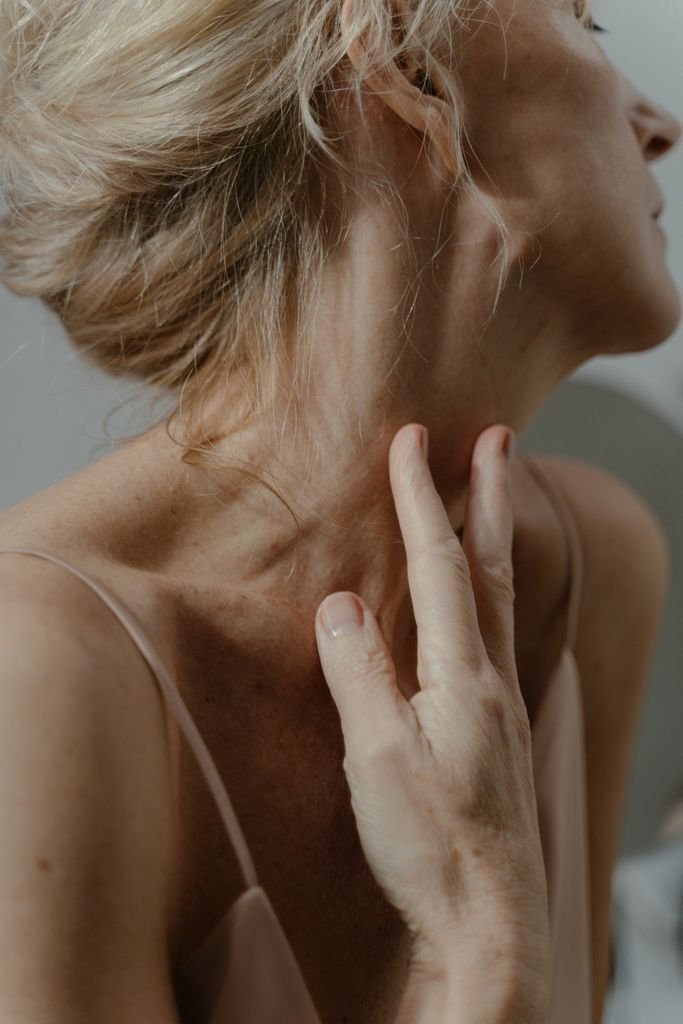
If you take a quick look at your current skincare lineup, chances are it is heavily stacked with products designed specifically for your face. We invest in gentle cleansers, hydrating serums, active exfoliants and daily sun protection. All of them are carefully applied from the forehead down to the jawline. Then, right at the chin, the routine stops…
This phenomenon is so common it has earned a name in holistic aesthetics: the facial boundary trap. We treat the face as a standalone canvas, often overlooking the neck, the décolletage (chest) and the hands. Yet these three regions are actually the first to display signs of environmental wear, moisture loss and loss of firmness.
Whether you are in your 20s looking to get ahead of premature ageing, in your late 30s noticing subtle shifts in texture or in your 50s and beyond seeking deep, structural nourishment, your neck, chest and hands need dedicated care. These areas are exposed to sunlight, wind, water, soap, friction and repeated movement, yet they often receive less moisturiser and less sunscreen than the face. That is why this topic matters at every stage. Prevention-focused readers can protect healthy-looking skin, people noticing early dryness or fine lines can respond thoughtfully and mature-skin readers can improve comfort without chasing unrealistic promises.
In this post I’ll walk you through the distinct biological profile of these “forgotten zones”, explain how they differ from the rest of the body and how age affects them. Then we’ll look into how by leveraging the power of carrier oils, alongside targeted essential oils, you can preserve skin resilience, repair past damage and keep your skin soft and glowing at every stage of life.
How Neck, Chest and Hands Differ from Facial and Body skin
To care for your neck, chest, and hands effectively, it helps to understand why they behave so differently from the skin on your cheeks or forehead. These zones carry structural liabilities that make them vulnerable to premature aging.
       Comparative Breakdown: Facial Skin vs. The "Forgotten Zones"
┌──────────────────────┬────────────────────┬──────────────────────────────────┐
│ Structural Feature   │ Facial Skin        │ Neck, Chest & Hands              │
├──────────────────────┼────────────────────┼──────────────────────────────────┤
│ Dermal Thickness     │ Medium to Thick    │ Exceptionally Thin               │
├──────────────────────┼────────────────────┼──────────────────────────────────┤
│ Sebaceous Glands     │ High Density       │ Sparse to Minimal                │
├──────────────────────┼────────────────────┼──────────────────────────────────┤
│ Natural Lipid Barrier│ Strong             │ Fragile & Easily Compromised     │
├──────────────────────┼────────────────────┼──────────────────────────────────┤
│ Primary Stressors    │ Pollution, UV      │ UV, Mechanical Motion, Washing   │
└──────────────────────┴────────────────────┴──────────────────────────────────┘
The Neck: High Mobility, Low Lipid Support
The skin covering the neck is remarkably thin, closely resembling the fragile tissue around your eyes. It sits directly over the platysma, a broad, thin sheet of muscle that contracts every time you speak, turn your head, or look down at a screen.
Because the neck contains very few sebaceous (oil) glands, it lacks a self-replenishing lipid film. Without a steady supply of natural sebum, moisture evaporates rapidly, leaving the skin susceptible to horizontal lines and loss of elasticity.
The Décolletage (Chest): The Photo-Ageing Target
The chest area features even fewer oil glands than the neck, making natural hydration scarce. Furthermore, open necklines leave the upper chest continuously exposed to sunlight.
Decades of cumulative UV radiation break down collagen and elastin fibres in this thin dermis. This leads to vertical creases (often deepened by sleeping on your side), persistent redness and uneven pigmentation (age or sun spots) that heals much more slower than on the face.
The Hands: Constant Contact & Barrier Depletion
The skin on the back of your hands contains minimal subcutaneous fat and almost no oil glands. On top of that, your hands bear the brunt of everyday life.
Frequent handwashing, exposure to dish soaps, household cleaners, dry air, and unfiltered UV light through car windows constantly strip away the stratum corneum’s natural fats. This continuous stress triggers trans-epidermal water loss (TEWL), leading to chronic dryness, thin-looking skin, and fragile cuticles.
What Actually Causes Neck, Chest and Hands Premature Skin Ageing?
UV radiation. It’s the dominant cause. As UVA reaches the dermis, it generates free radicals that switch on enzymes called matrix metalloproteinases. They’re responsible for breaking down collagen and elastin. Over years, degradation outpaces repair and the dermis thins. The same exposure prods melanocytes into uneven pigment production, which surfaces as age spots on the hands and mottled tone on the chest. Note where it lands: the V of the chest, the backs of the hands, and the sides of the neck rather than the front. The arm nearest the car window collects noticeably more than the other one.
Repeated washing and detergent. Surfactants dissolve the lipids and natural moisturising factors holding the skin barrier together. On the back of the hand there are essentially no sebaceous glands to replace them. Hot water accelerates the process further. The result is chronic barrier impairment because water leaves faster than it’s been replaced.
Mechanical folding and compression. The neck flexes several hundred times a day and skin low in collagen doesn’t spring back from repeated folding the way young skin does. Side-sleeping presses the chest into vertical folds for hours at a stretch. Those creases are compression lines, not sun damage.
The lipid deficit underneath it all. These areas start with very few oil glands and sebum output declines further from around 30. Every stressor above meets a barrier with less to defend itself with, which is precisely the gap oils are good at filling.
What Natural Oils Can Do for Neck, Chest and Hands
First, what a carrier oil is actually doing. Your skin barrier is a bit like a brick wall — cells are the bricks, and a mix of natural fats fills the gaps like mortar. Wash, sun and age all wear that mortar away, and the neck, chest and hands make very little of their own to replace it. A carrier oil tops the mortar back up. Different plant oils have differently shaped fats, which is why they feel and behave so differently on skin, and why the right one for a neck isn’t the right one for a hand.
Essential oils do not moisturise. Every bit of the softening, plumping, less-crepey effect comes from the carrier oil. Their contribution is different in kind. They have small, fat-soluble molecules that can cross the stratum corneum and interact with cells underneath. So they can help with pigmentation and sun damage, protect collagen, boost skin’s own oil production and encourage the skin’s own oil production.
Best Carrier Oils for Neck, Chest and Hands
Broccoli Seed Carrier Oil
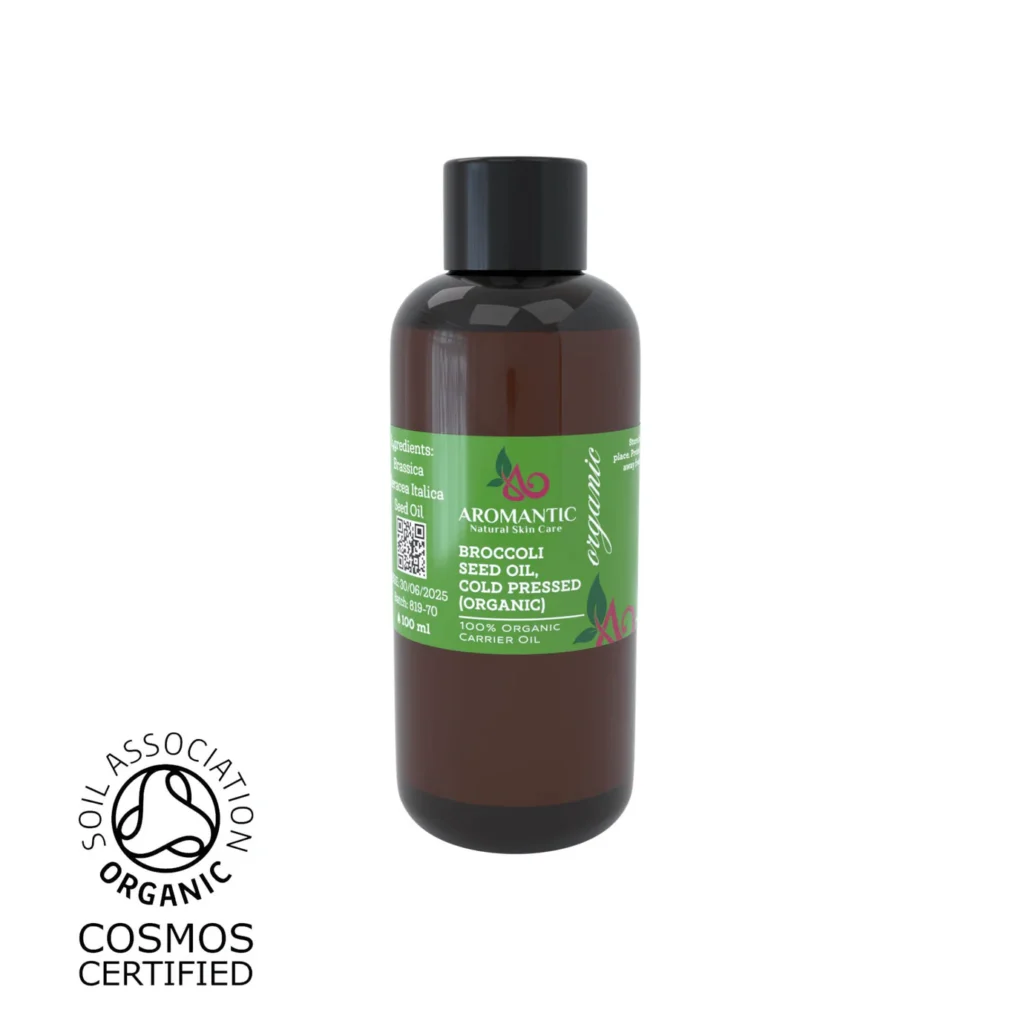
Broccoli Seed carrier oil contains a lot of one particular fat with a long, slippery molecule, and the result feels remarkably like silicone: dry, silky and it glides. That’s exactly what thin neck skin needs, because you can spread it without pulling at the skin. It also leaves behind a very light film that slows water escaping.
Sea Buckthorn Carrier Oil
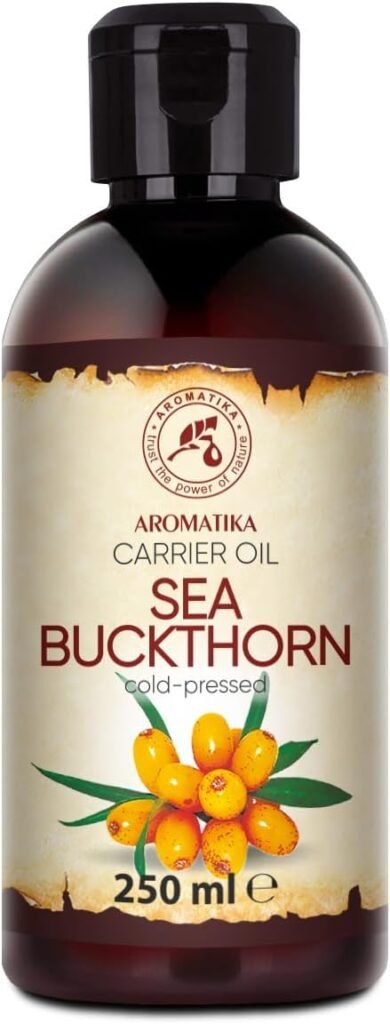
This oil is about as close as you can get to a like-for-like refill for skin that has slowed its own oil production down. And this is because Sea Buckthorn carrier oil is loaded with palmitoleic acid, a fat our skin produces itself and becomes depleted of as we grow older (which is exactly what’s happening on a neck, chest and hands). The vivid orange colour comes from carotenoids, the same family of antioxidants that makes carrots orange, so you get some protection against sun damage alongside the refill. Use it as a small part of a blend, never on its own: it stains fabric and on very fair skin it leaves a faint apricot tint.
Meadowfoam Seed Carrier Oil
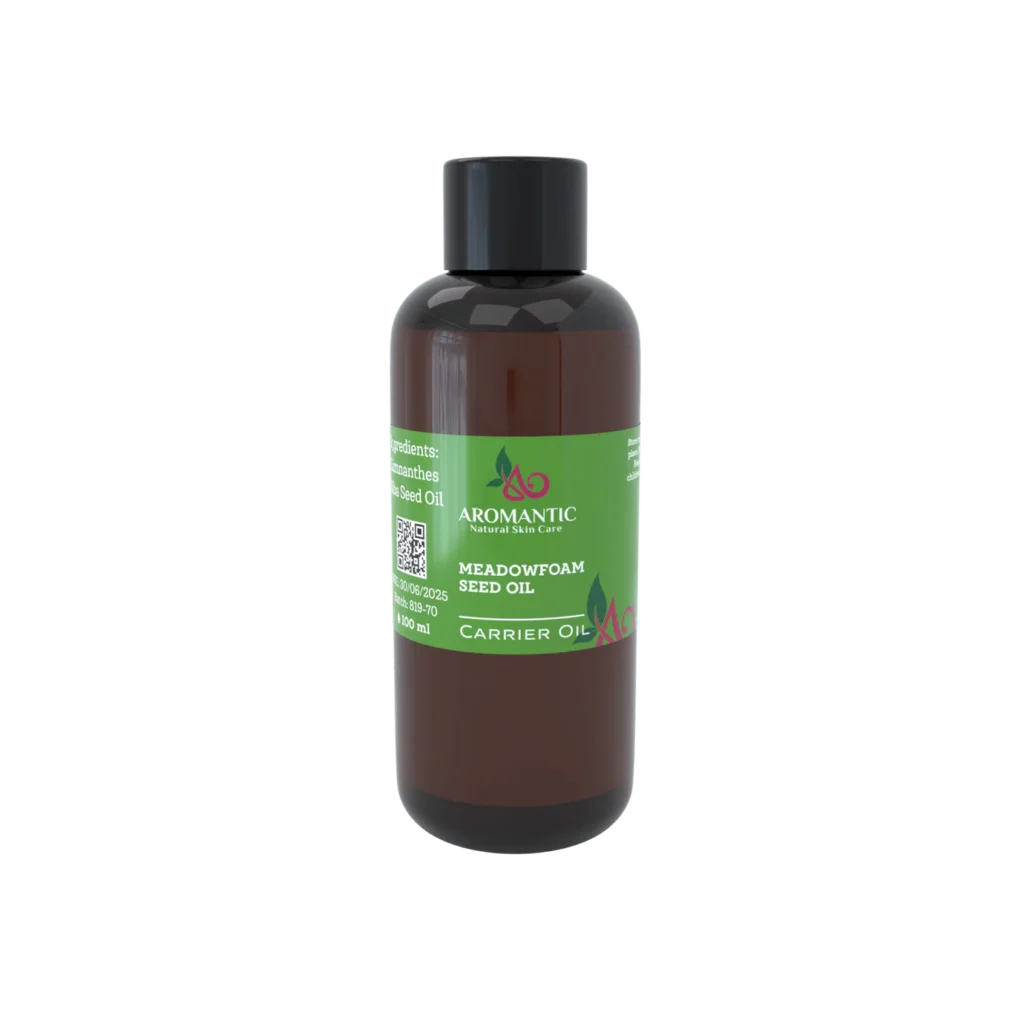
Meadowfoam Seed carrier oil‘s job is holding water in, and it does that on all three areas without ever feeling heavy. Leaves skin soft, smooth, and nourished with a light, non-greasy feel. Most oils are gone within a wash or two, which is why hand cream so often feels like a waste of effort, whereas this one clings on and is still doing something hours later.
Pomegranate Seed Carrier Oil
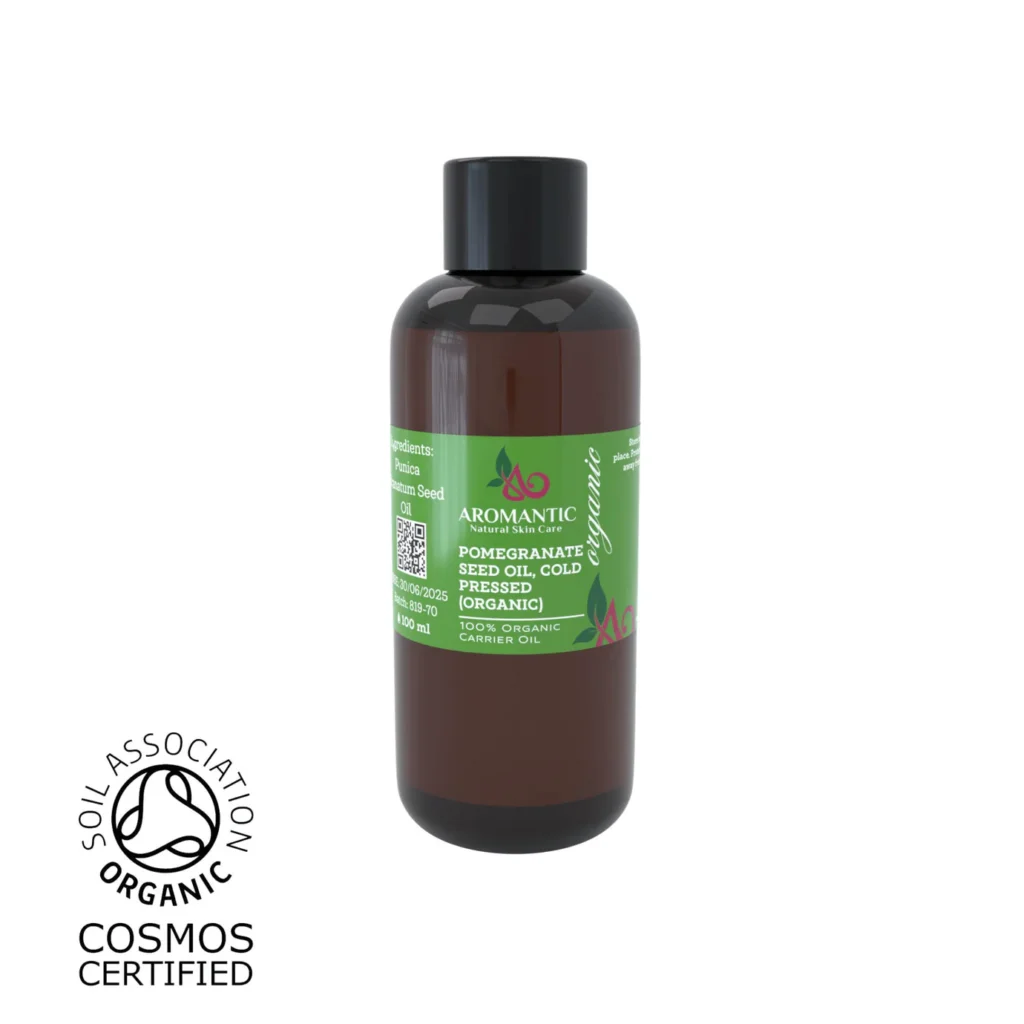
Pomegranate Seed carrier oil targets thinness. In one study, pomegranate seed oil encouraged the cells of the skin’s outer layer to multiply, producing a mild thickening of the epidermis. That specificity is what makes it worth the money here: on the neck and chest, the visible problem is skin that has genuinely become thinner, and this works on exactly that layer. It’s also very rich in vitamin E.
Rice Bran Carrier Oil
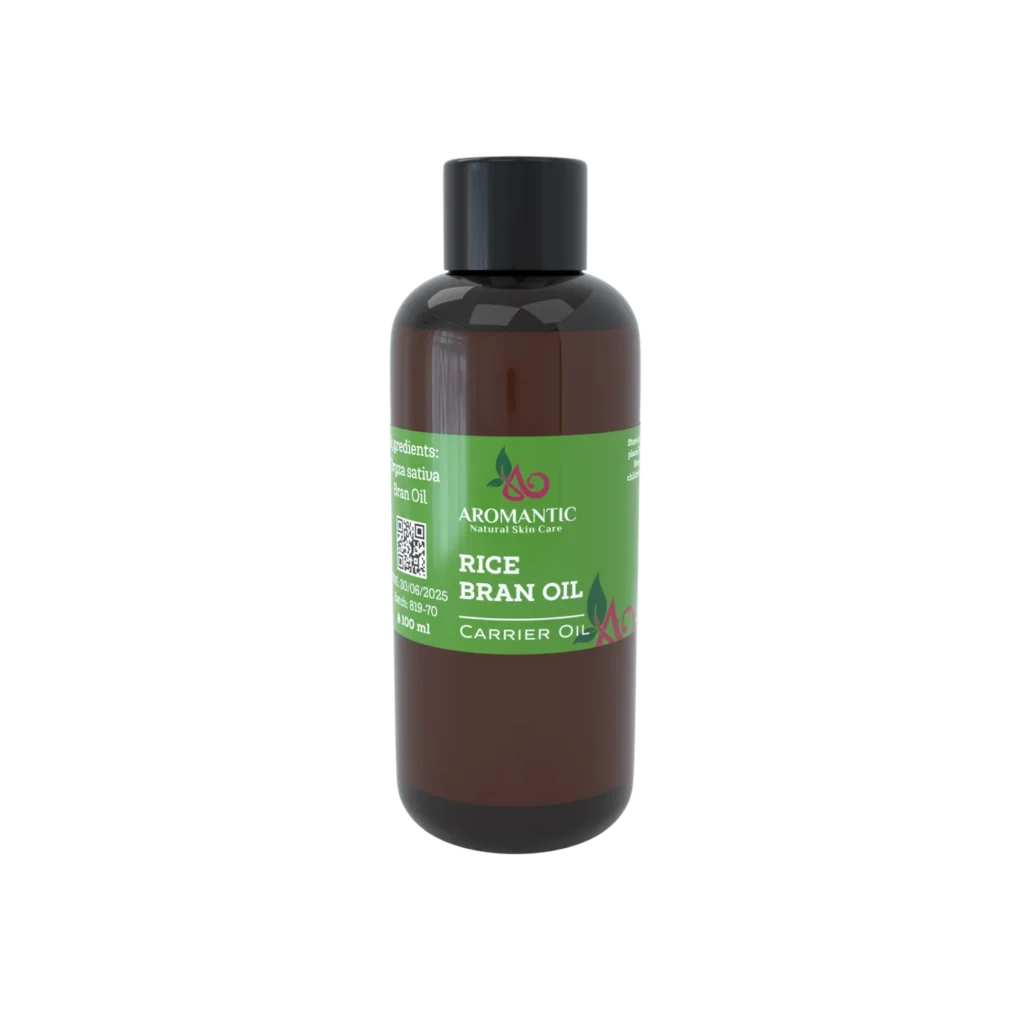
Rice Bran carrier oil is perfect for the chest. It’s the only widely available oil containing an antioxidant called gamma-oryzanol. It does two useful things at once: it mops up the damage sunlight causes inside skin and it slows melanin production — the process behind dark patches and mottled colour. Rice Bran oil also carries ferulic acid. It neutralises free radicals from pollution and UV rays, fades dark spots and reduces fine lines. As the chest is affected by sun exposure and collagen and elastin breakage as its consequence, Rice Bran oil is surely a must have.
Best Essential Oils for Neck, Chest and Hands
Helichrysum Essential Oil (Helichrysum italicum)
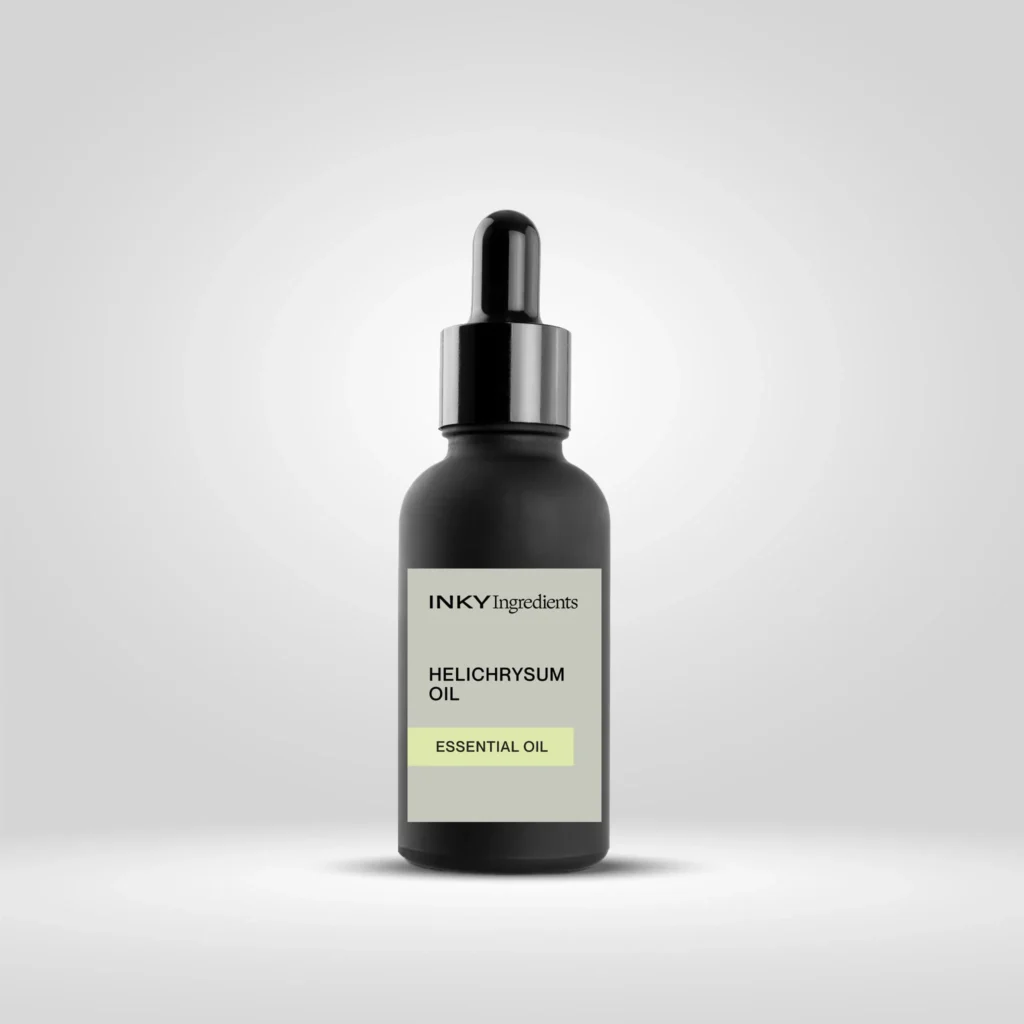
Helichrysum essential oil prompts the skin to make more of its own protective oils: in lab tests on real skin samples, the main compound in Corsican helichrysum raised the skin’s own lipid levels. Given that a neck has barely any oil glands to begin with, an oil that encourages it to produce more is well matched to the problem. It’s expensive, and quality varies a lot depending on where it’s grown.
Patchouli Essential Oil (Pogostemon cablin)
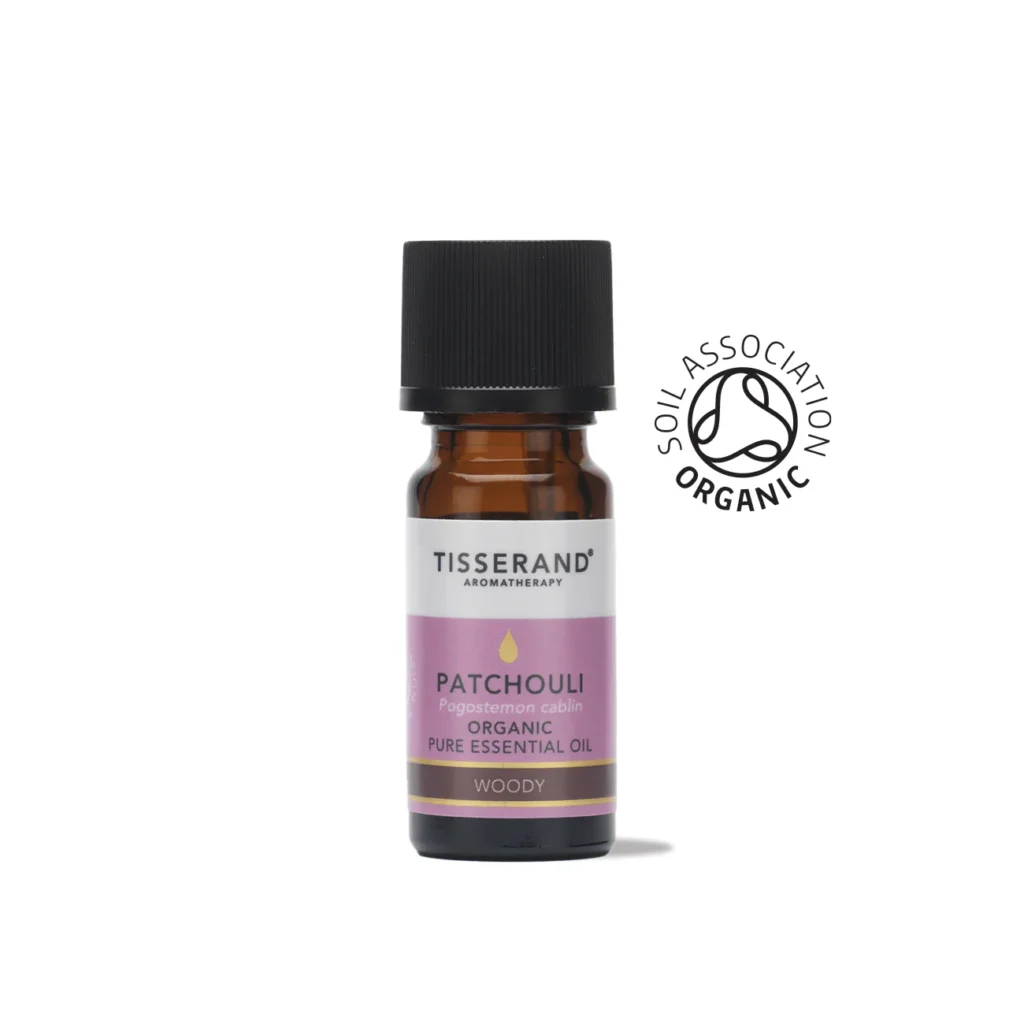
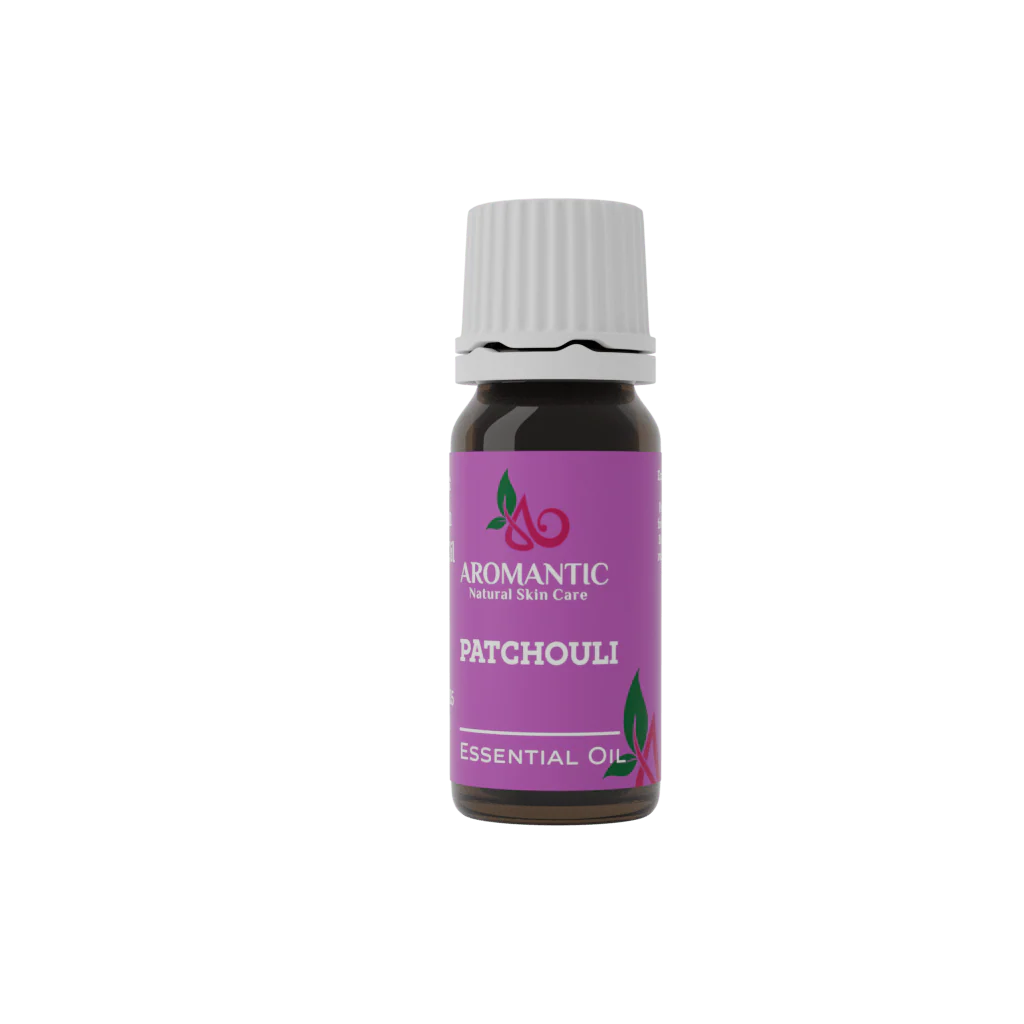
Patchouli essential oil is great for age spots on the hands. It slows that pigment-making step, it protects skin from sun damage and it doesn’t make skin sun-sensitive, which matters for the part of you that gets the most daylight. This oil is a true hero with amazing benefits, and it deserves a proper look
Neroli Essential Oil (Citrus aurantium)
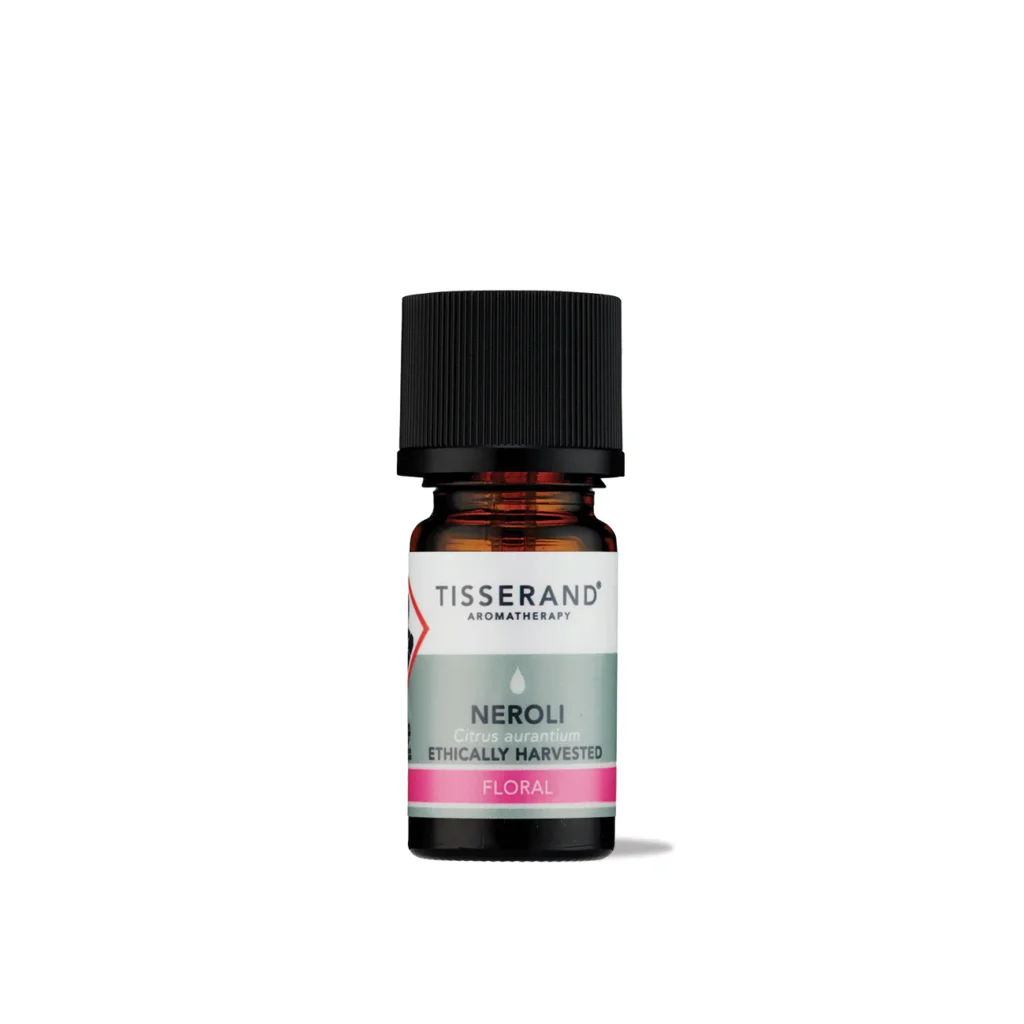
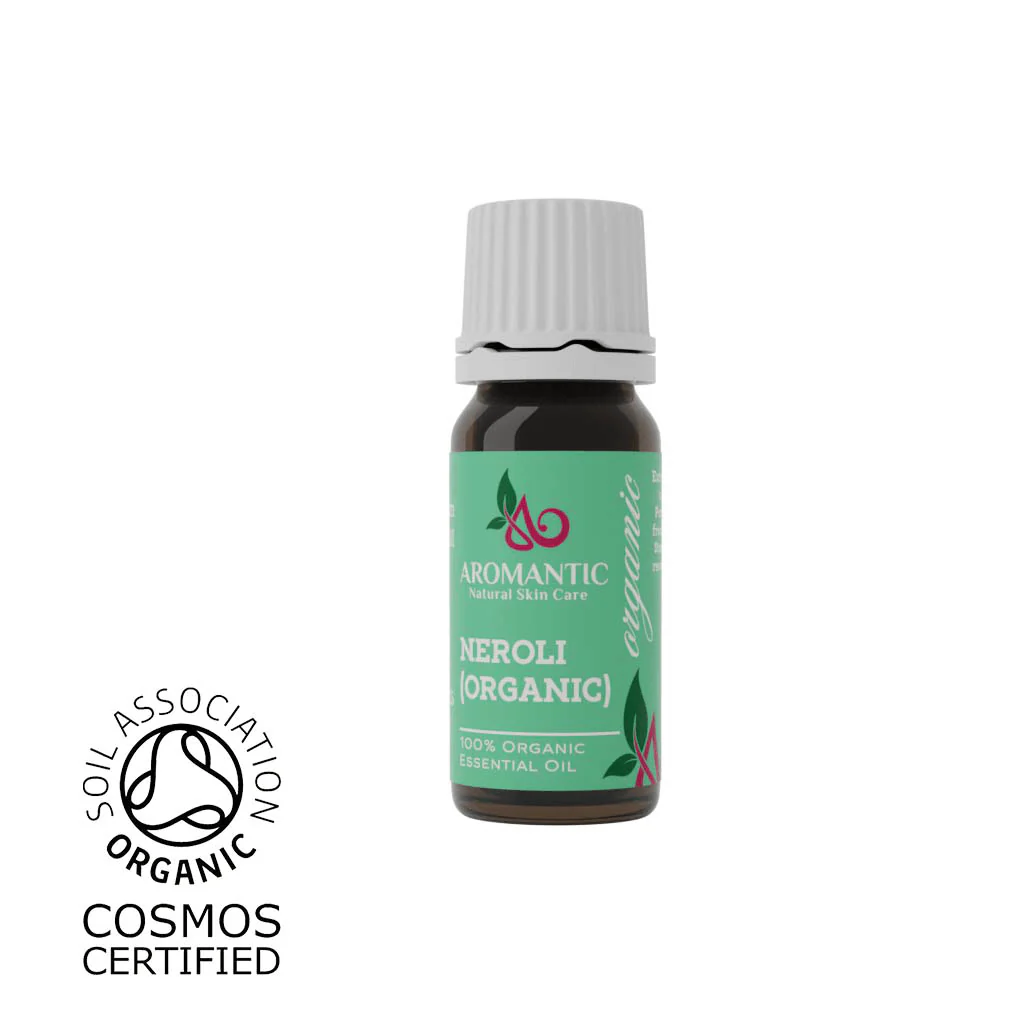
Neroli essential oil is distilled from orange blossom rather than pressed from peel that’s why – unlike most citrus oils, such as lemon, lime or bergamot – it won’t make skin sun-sensitive. It’s the long-standing choice for thin, mature and sun-worn skin and gentle enough to use.
Sandalwood (Santalum album or S. spicatum)
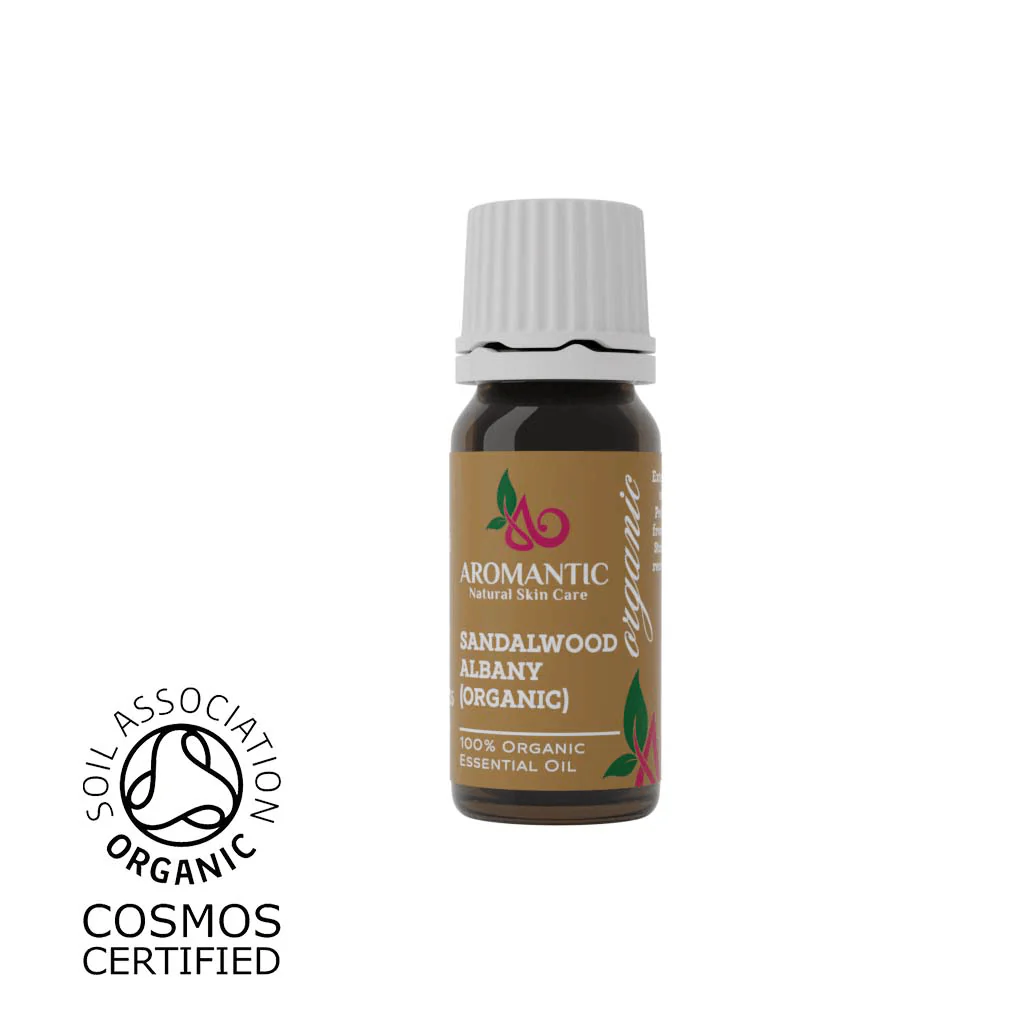
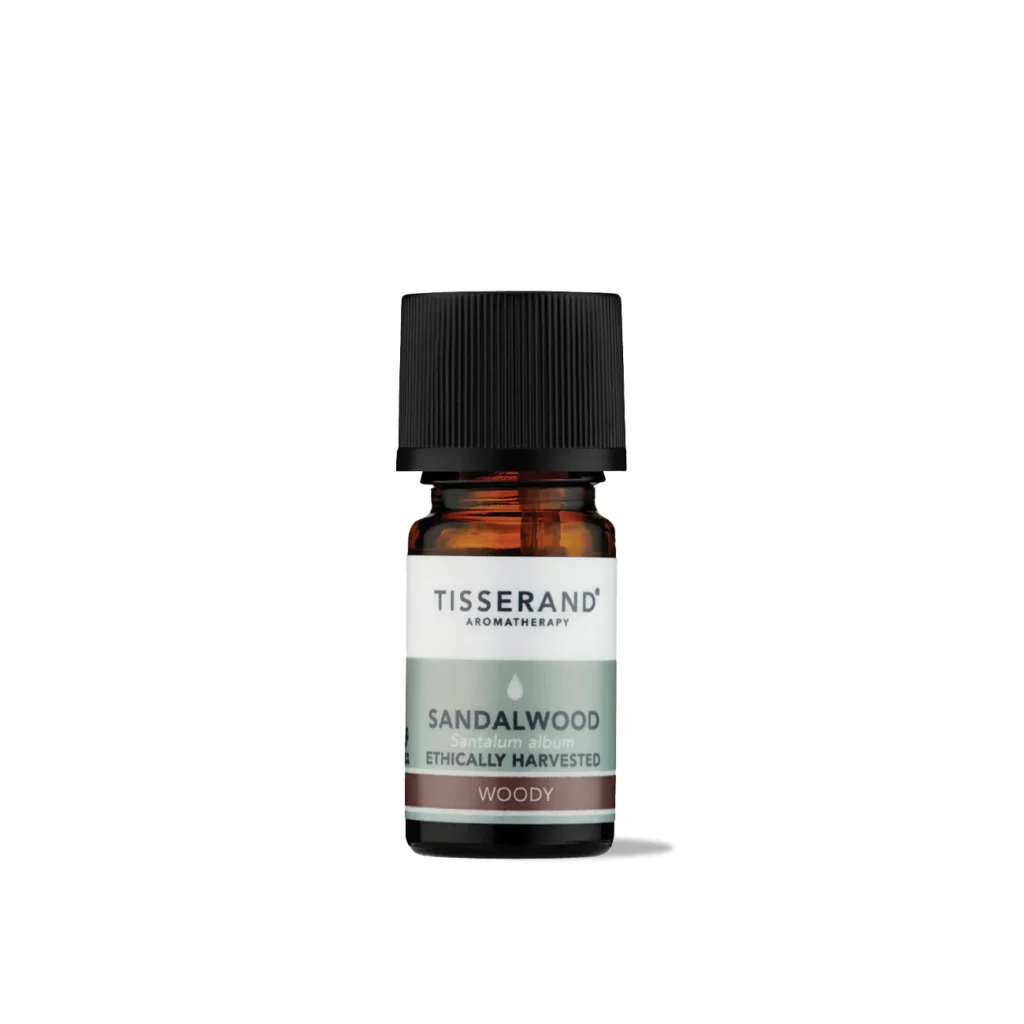
Sandalwood essential oil is used for uneven skin tone. It slows the pigment-making step, so fewer new dark patches form over the months you use it. It calms skin that reddens easily. Australian sandalwood (Santalum spicatum) is the sustainable choice.
Frankincense Essential Oil (Boswellia carterii or B. serrata)
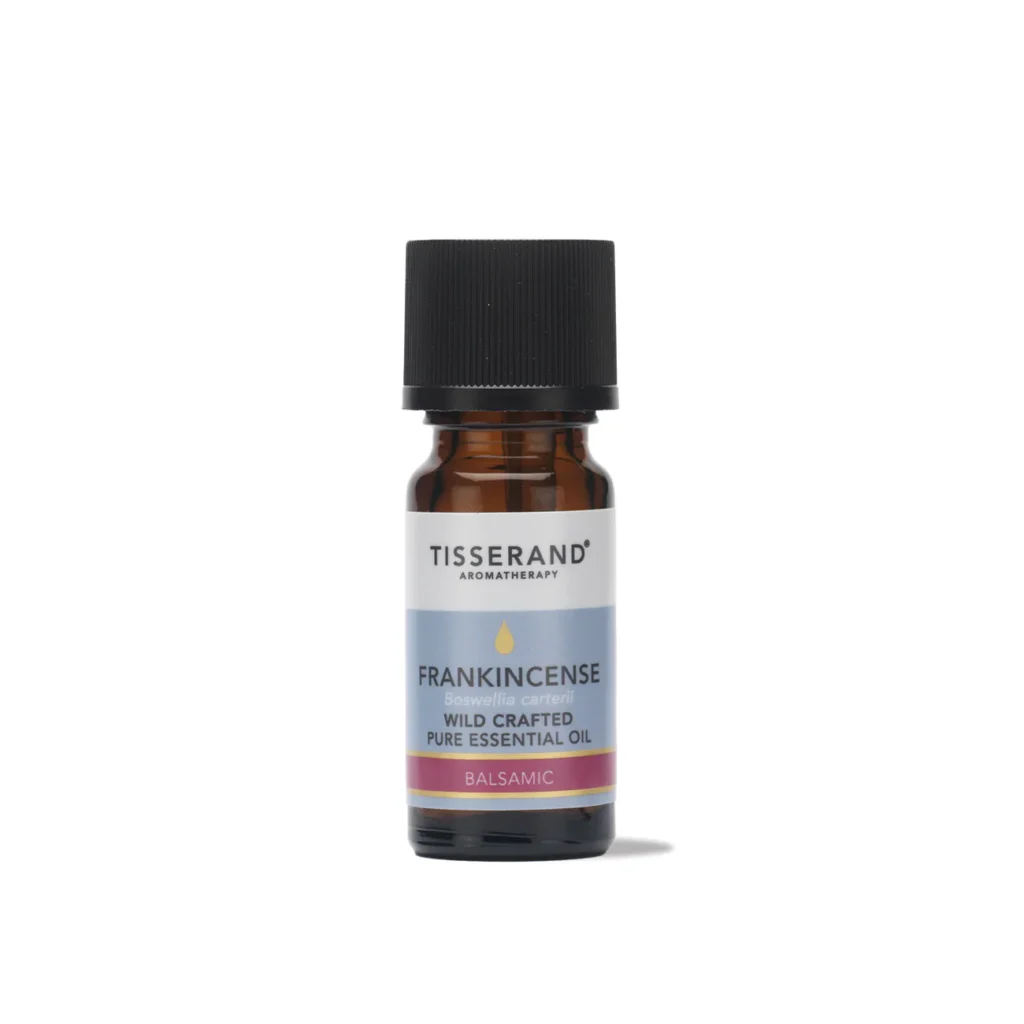
Frankincense essential oil is famous for assisting the skin to stay firm. As sun exposure contributes to the collagen and elastin break down, Frankincense essential oil plays important role in mitigating the damage. It’s a very gentle oil, easy to find and blends well with everything else here.
At a glance:
| Essential oil | What it does | Best for | Keep in mind |
|---|---|---|---|
| Helichrysum | Encourages skin to make more of its own protective oils | Neck | Expensive; quality varies a lot by origin |
| Patchouli | Slows new pigment; some protection from sun damage; doesn’t make skin sun-sensitive | Hands | Strong scent, but blends better than you’d expect |
| Neroli | Gentle support for thin, sun-worn skin; won’t make skin sun-sensitive | Chest | Costly, but a little goes a long way |
| Sandalwood | Slows new pigment | Chest and hands | Choose Australian for sustainability |
| Frankincense | Helps protect collagen and elastin from sun damage | All three | Widely available and easy to blend |
Mistakes to Avoid When Choosing and Applying Oils
Citrus oils on the chest and hands. Applying citrus oils to the most sun-exposed areas on your body is how you acquire new pigmentation.
Applying to bone-dry skin. Oils seal in water, they don’t supply it. On dry skin you’re sealing in nothing.
Stopping at the front of the neck. The sun damage shows up on the sides. Take everything out to below the ears.
DIY Recipes for Neck, Chest and Hands
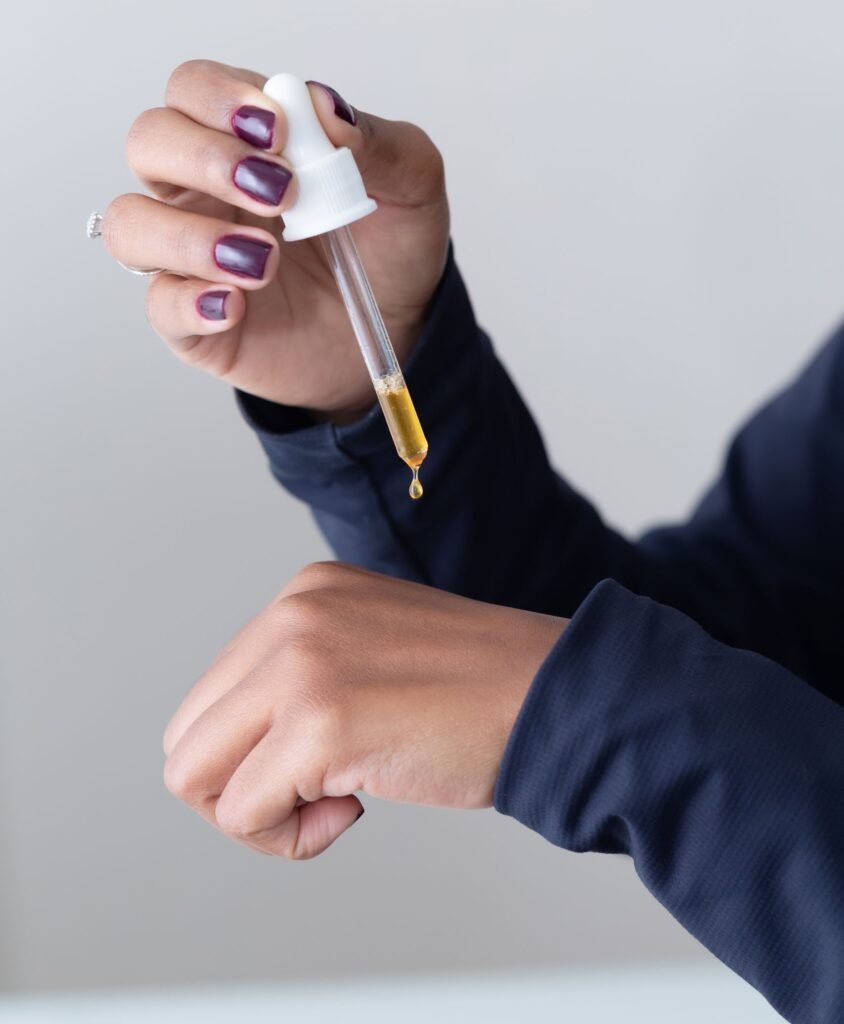
Daily Shield & Firming Neck Serum
| Ingredient | % | Grams |
|---|---|---|
| Broccoli Seed carrier oil | 50% | 15 g |
| Pomegranate Seed carrier oil | 30% | 9 g |
| Meadowfoam Seed carrier oil | 19% | 5.7 g |
| Vitamin E | 1% | 0.3 g |
| Helichrysum italicum essential oil | 4 drops | |
| Frankincense essential oil | 2 drops |
How to make: Combine the carrier oils in a 30 ml amber glass dropper bottle, add the essential oils and Vitamin E. Shake before use.
How to use: Every morning and evening, apply 3–4 drops to clean, damp skin using upward sweeping strokes from your collarbone to your jawline.
Restorative Décolletage Overnight Elixir
| Ingredient | % | Grams |
|---|---|---|
| Rice Bran carrier oil | 55% | 16.5 g |
| Pomegranate Seed carrier oil | 18% | 5.4 g |
| Meadowfoam Seed carrier oil | 16% | 4.8 g |
| Sea Buckthorn carrier oil | 10% | 3 g |
| Vitamin E | 1% | 0.3 g |
| Neroli essential oil | 4 drops | |
| Sandalwood essential oil | 3 drops | |
| Patchouli essential oil | 2 drops |
How to make: Combine the carrier oils in a 30 ml amber glass dropper bottle, add the essential oils, cap and invert. Roll gently between your hands to blend.
How to use: For better results mist your chest first and then gently press 4–5 drops of the elixir over your décolletage. Note: Sea Buckthorn carrier oil can stain very fair skin and will mark bedlinen.
Protective Hand & Cuticle Rescue Balm
| Ingredient | % | Grams |
|---|---|---|
| Meadowfoam Seed carrier oil | 48% | 24 g |
| Unrefined Shea butter | 25% | 12.5 g |
| Beeswax | 12% | 6 g |
| Broccoli Seed carrier oil | 11% | 5.5 g |
| Sea Buckthorn carrier oil | 3% | 1.5 g |
| Vitamin E | 1% | 0.5 g |
| Patchouli essential oil | 8 drops | |
| Frankincense essential oil | 4 drops | |
| Sandalwood essential oil | 3 drops |
How to make: Melt Beeswax and Shea butter together in a bain-marie until they turn into liquid. Remove from the heat and stir in the Meadowfoam, Broccoli Seed and Sea buckthorn oils. When the blend is cooled down to around 40°C, add Vitamin E along with essential oils. Pour the mixture into a 50 ml amber glass jar and leave to set.
How to use: Warm a pea-sized amount between your palms and massage into the backs of your hands and cuticles daily.
Final Thoughts
Caring for your skin doesn’t have to stop at your jawline. By expanding your daily routine to give your neck, chest, and hands the specialised lipid support they need, you can protect these delicate areas from premature ageing and keep your skin feeling soft, nourished and radiant at every age.
Natural oils offer loads of benefits and should be the important part of your daily routine in my opinion. Oils are my first go to for any kind of skin and hair problems. And this is because every time I use them, they truly deliver the results. I very carefully look after my own neck, chest and hands and my favourite combination is Pomegranate oil, Rice Bran oil and a couple of drops of Frankincense essential oil. Very simple blend, yet very hydrating and works magic on the skin tone.
What is your usual routine when it comes to Neck, Chest and Hands care? Are there any oils you particularly like? Leave your comment down below, I’d love to hear from you.
Disclaimer: This post contains affiliate links. If you purchase through these links, I may earn a small commission at no extra cost to you — it helps me keep creating free content. I only ever recommend products I personally use and trust. This information is for educational purposes only and is not intended to diagnose, treat, cure, or prevent any disease. Always patch test new ingredients, and consult with a healthcare provider if you have specific skin conditions or concerns. If you’re pregnant, nursing, or on medication, check with your doctor before using essential oils.