How to Rebuild Your Skin Barrier After Summer at 40
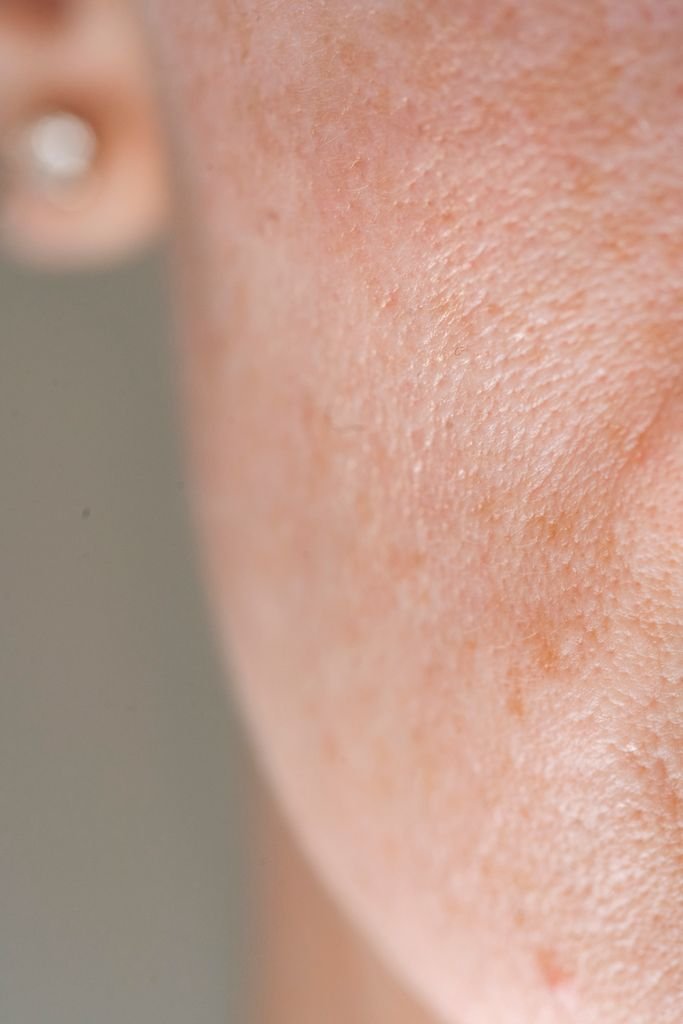
It happens at almost exactly the same point every year. It’s the end of August and suddenly my skin doesn’t feel as good as it did only a couple of weeks ago. It looks dull and feels dry to touch. It reacts differently to the usual moisturiser and won’t glow after applying the serum as usually.
As my first call is always natural oils and essential oils, whatever the problem (as you may know by now!), I used to reach for something richer and more nourishing. It took me a while to realise this isn’t dryness at all — it’s how the skin barrier responds to a summer of sun exposure, and I’d been solving the wrong problem. The good news is that it responds beautifully to the right oils, and this post will help you choose them.
In this article I’ll explain what your skin barrier actually is, what changes about it after 40, how a summer of sun exposure depletes it, and whether natural oils are genuinely the best answer. Then I’ll go through the five carrier oils and four essential oils that suit a depleted barrier best and two DIY recipes you can make tonight.
What Your Skin Barrier Actually Is
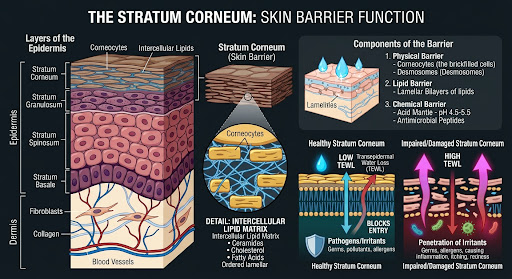
Your skin barrier (stratum corneum) is the outermost layer of your skin and it’s only about as thick as a sheet of kitchen film.
The easiest way to picture it is as brickwork. Your skin cells are the bricks. Holding them together is a matrix of lipids: ceramides, cholesterol and free fatty acids, in roughly a 3:1:1 ratio. That lipid matrix is the mortar, and it does two jobs at once. It keeps water inside your skin, and it keeps irritants, bacteria and allergens outside.
When the mortar is intact, your skin feels comfortable, tolerates products without complaint, and stays hydrated through the day. When the mortar develops gaps, two things happen simultaneously: water escapes faster than it should, and everything you apply gets in faster than it should.
Here’s the sign that tells you which problem you have. Dry skin feels rough, looks flaky, and responds well to more or less any nourishing product. A damaged barrier stings. If something you’ve used comfortably for months has started to nip or tingle on application, that isn’t a reaction to the product, it’s your barrier telling you there are gaps in the mortar.
What Changes at 40 That Didn’t Before
The difference is that younger skin repairs itself very quickly. After 40, four things change, and they compound each other.
Your skin makes fewer ceramides. Oestrogen supports ceramide synthesis. As levels begin falling through perimenopause, your skin produces less of the very lipid the barrier is built from. You’re rebuilding the mortar with less cement available.
Sebum production drops. Progesterone partly regulates the sebaceous glands and as it declines they become less active. Less surface oil means less natural occlusion, so water leaves faster in the first place and it’s before any sun damage has even been factored in.
Cell turnover slows considerably. In your twenties the stratum corneum renews itself in roughly 28 days. By your forties and fifties that can stretch to six or seven weeks. Repair that used to take four days can genuinely take a fortnight.
Your Natural Moisturising Factor becomes less efficient. NMF is the group of water-binding compounds (amino acids, urea, lactic acid) that live in the surface layers and hold water where you need it. Production slows with age, so even a well-lipidised barrier holds less water than it once did.
Put together, this is why a summer that your skin shrugged off at 30 leaves it struggling at 45. Nothing has gone wrong. The maintenance system is simply running slower with the same demands that haven’t changed.
How a Summer of Sun Actually Affects Your 40+ Skin
This is the part I found genuinely useful to understand, because it explains why the damage appears in August rather than after any particular day out.
UV degrades barrier lipids directly. A day in strong sun measurably increases transepidermal water loss which is the rate at which moisture escapes through your skin. It happens even on days when you didn’t feel you’d caught the sun at all.
Healthy skin patches the damage, which is why you never notice. Give a young, intact barrier three or four days and it repairs itself completely. The problem is what happens when exposure keeps coming week after week, with progressively less recovery time in between (like this summer for instance).
After 40, the recovery window is longer than the gap between exposures. If repair takes ten days and you’re outdoors twice a week, the losses accumulate rather than resolve. By mid-August the deficit is finally large enough to feel.
And everything else about summer compounds it. Air conditioning strips humidity from indoor air. Chlorine and salt water disrupt surface lipids. Most of us cleanse more often in warm weather and wear lighter products. None of these is significant alone. Together and over eleven weeks, they do matter.
Are Natural Oils the Best Solution for Impaired Skin Barrier After 40?
I want to answer this honestly rather than simply saying yes, because I think the honest answer is more useful – and it changes how you use them.
What oils do better than anything else: replace lipids. Your barrier is built from fatty acids and plant oils are fatty acids. Apply a well-chosen oil and you’re handing your skin the raw material it uses to rebuild itself. A water-based moisturiser can hydrate the surface, but it can’t do that.
What oils can’t do: add water. There is none in them. Oils fill the gaps between cells and slow evaporation, but they have nothing to hydrate with. This is exactly why so many people say face oils “did nothing” for them. They applied one to bone-dry skin, and it sealed in nothing because there was nothing there to seal.
So oils are the best answer to half the problem. The solution? Use a humectant first such as hyaluronic acid, glycerin, or simply aloe. Apply it onto damp skin, then your oil on top to hold it there. Done that way, plant oils outperform most conventional moisturisers for a depleted barrier. Done alone on dry skin, they disappoint every time.
5 Best Carrier Oils for a Depleted Skin Barrier at 40+
You will notice that the selected oils, apart from Squalane, carry high content of linoleic acid. The reason for it is that your skin uses it to build its own barrier lipids. Unfortunately linoleic acid is the one fatty acid your skin can’t manufacture for itself, so it has to come from your plate or your bathroom shelf.
Raspberry Seed Oil
Raspberry Seed carrier oil is around 50–55% linoleic acid and unusually it also carries a substantial amount of alpha-linolenic acid (omega-3), which is rare among plant oils and particularly valuable for calming a barrier that’s become reactive.
Best for: skin recovering from sun exposure; dryness combined with dullness
Why it’s such a good match for this problem specifically: skin that’s spent a summer outdoors hasn’t only lost lipids. It’s taken sun damage at the same time. Raspberry Seed carrier oil is unusually rich in antioxidants, so it does both jobs at once: rebuilding lost lipids and helping settle the damage that’s already there. Very few oils manage both this well. It has a light-to-medium texture, a faint fruity scent, and absorbs without leaving a film.
How to use it: 3–4 drops onto slightly damp skin, morning or evening. It works beautifully as the base of a repair blend, or on its own if you’d rather keep things simple while your skin settles.
Prickly Pear Seed Oil
Prickly Pear Seed carrier oil is around 60% linoleic acid, among the highest of any oil available. It has the most remarkable vitamin E content of anything I use. And it’s considerably higher than Argan carrier oil, which is its usual comparison.
Best for: dry, depleted, mature skin; evening use; skin that feels fragile as well as tight
Why it suits 40+ skin particularly: most oils simply add lipids from the outside. Prickly Pear Seed oil also encourages your skin to produce more of them, which is exactly what skin after 40 needs as it produces less lipids. For skin that feels thin and fragile after a long summer, it’s very restorative. It’s expensive. But as you use it in drops a 30ml bottle will last you long time.
How to use it: 2–3 drops as the final step of an evening routine or at around 20–30% of a facial oil blend. A little goes a very long way.
Hemp Seed Oil
Hemp Seed carrier oil is roughly 55% linoleic acid, with close to the ideal omega balance for skin. It’s also inexpensive, easy to find and won’t clog pores.
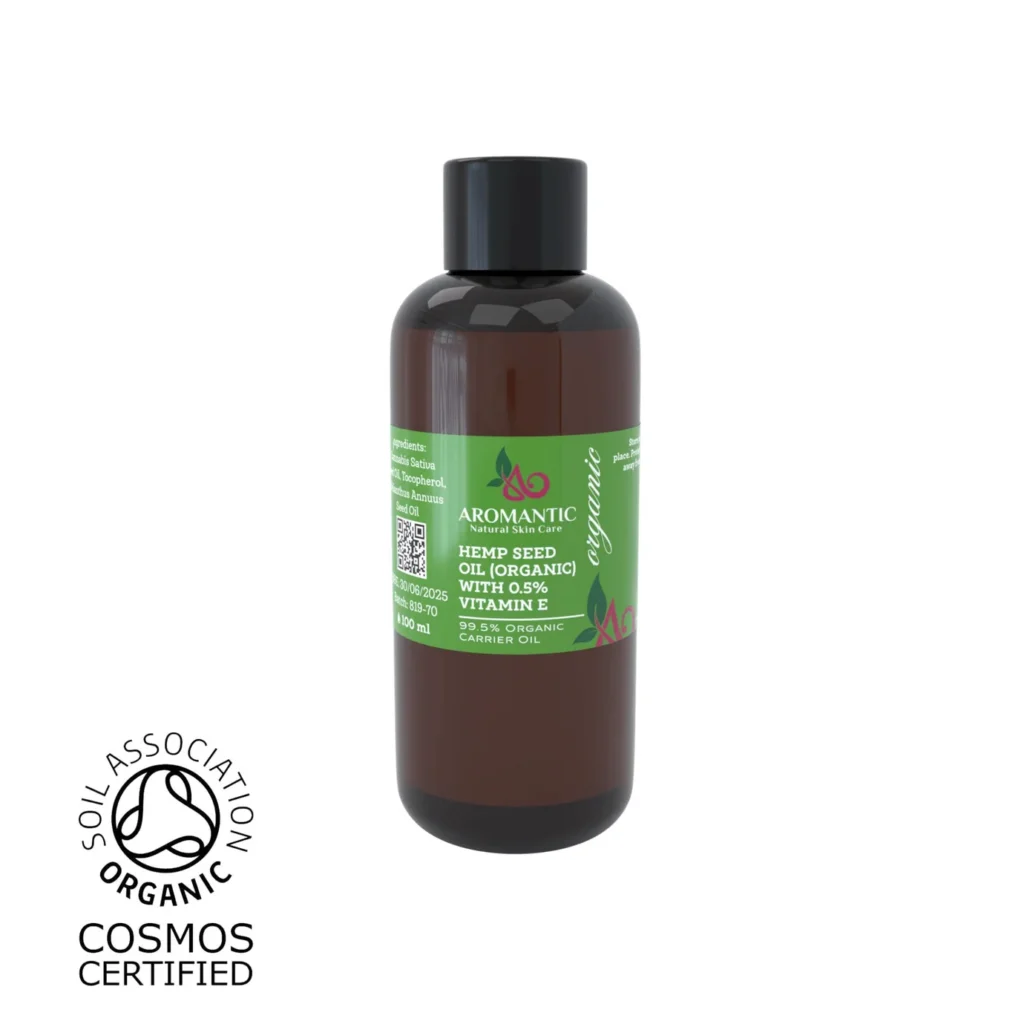
Best for: everyday use; anyone starting out; skin that dislikes anything heavy
Why it’s a good match: Despite how lipid-rich it is, Hemp Seed carrier oil absorbs quickly and leaves skin feeling dry to the touch rather than coated, which makes it far easier to wear in the morning than most repair oils. If you’ve avoided facial oils because you disliked the greasiness, this is the one to try. The one caveat is shelf life. Hemp turns faster than most carrier oils — expect around six months, less if it’s kept somewhere warm.
How to use it: 4–5 drops onto damp skin, morning or evening. It blends with almost anything and makes the sensible base for most repair formulas.
Cranberry Seed Oil
Cranberry Seed carrier oil has an almost perfect 1:1 balance of Omega-3 to Omega-6.
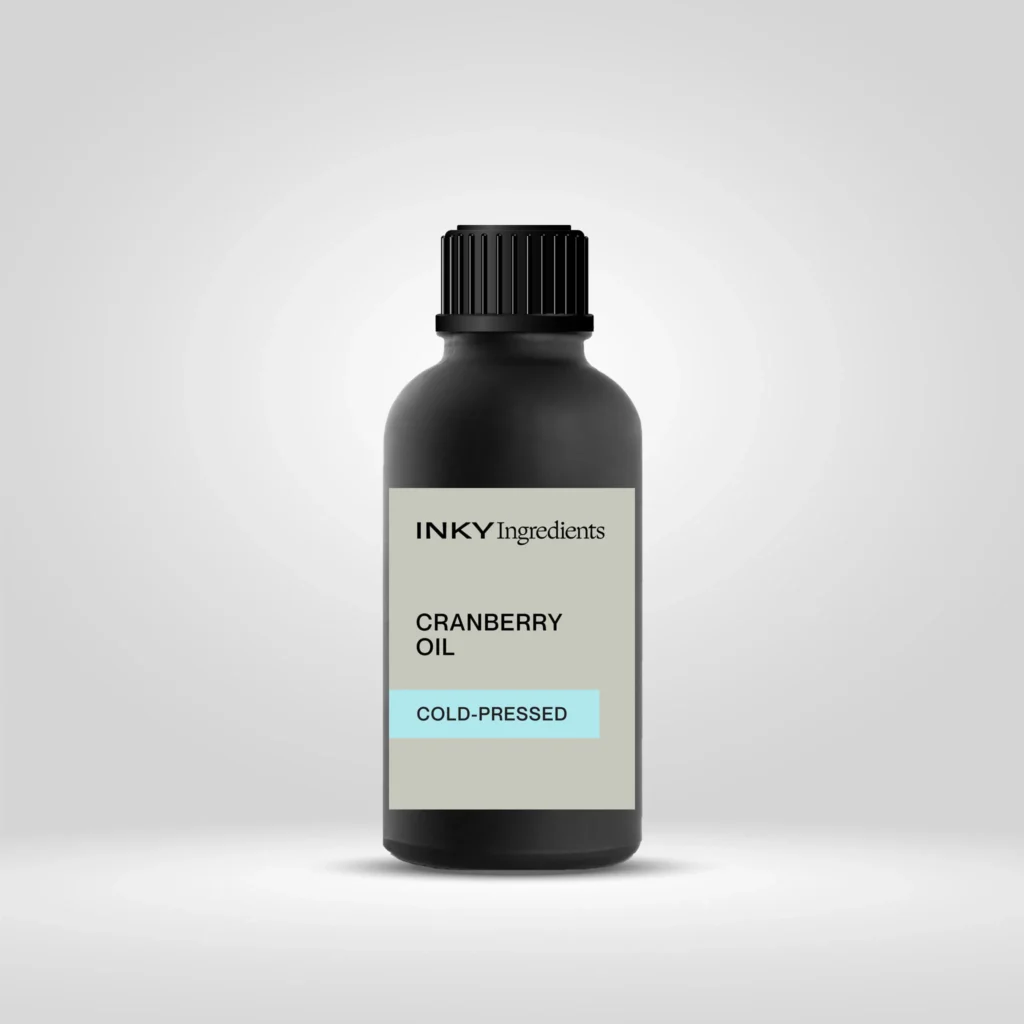
Best for: reactive, easily irritated skin; barrier repair; skin that flushes easily
Why it’s a good match for a damaged barrier: alongside Omega-3 and Omega-6 balance, Cranberry carrier oil carries a form of vitamin E that travels through the skin far more readily than the usual kind. By the end of summer a barrier is normally inflamed as well as depleted, and this combination tackles both issues.
How to use it: 2–3 drops in the evening alone or at around 20% of a blend. Particularly good if your skin has been flushing or blotching.
Squalane
Squalane is the odd one out here, because it isn’t really a plant oil at all. It’s an almost exact copy of something your own skin makes and what the skin produces less and less with the time.
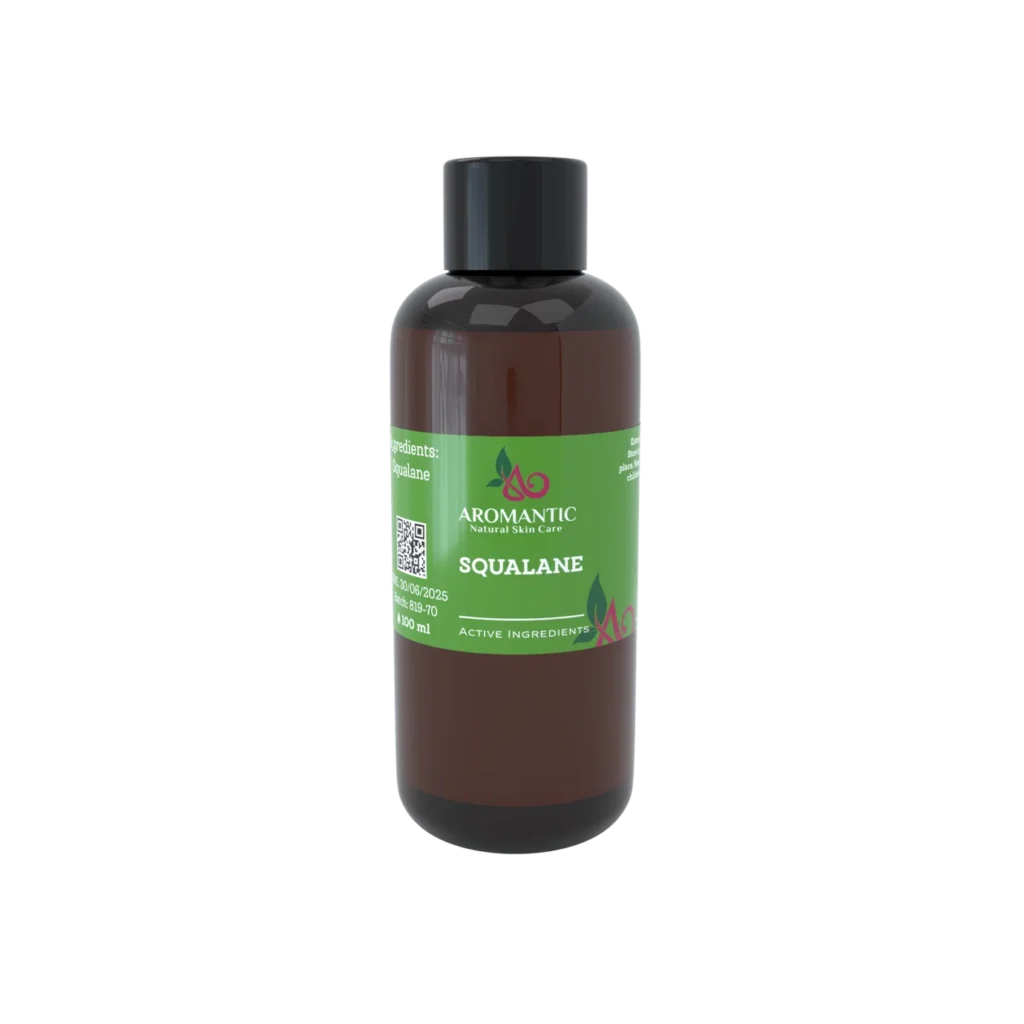
Best for: every skin type; skin that’s actively stinging; to stabilise a blend
Why it earns its place after 40: it isn’t rebuilding anything. What it does is seal immediately, absorb almost instantly and cause problems for virtually nobody. It also never goes rancid, so adding it to a blend helps keep the more fragile oils alongside it fresh for longer.
How to use it: 3–4 drops alone if your skin is stinging and you want something with nothing in it to react to. Otherwise use it at 30–40% of a blend as your steady base.
4 Best Essential Oils for Barrier Repair After 40
All the blends in this post sit at 1%, that’s 6 drops per 30ml. A compromised barrier is more permeable, so more of what you apply gets through, which means dilutions come down rather than up. If your skin is stinging right now, leave essential oils out altogether for the first week and use carrier oils alone.
Lavender — The Reliable One
Lavender essential oil is high in linalool and linalyl acetate, both calming and both well tolerated at low dilution.
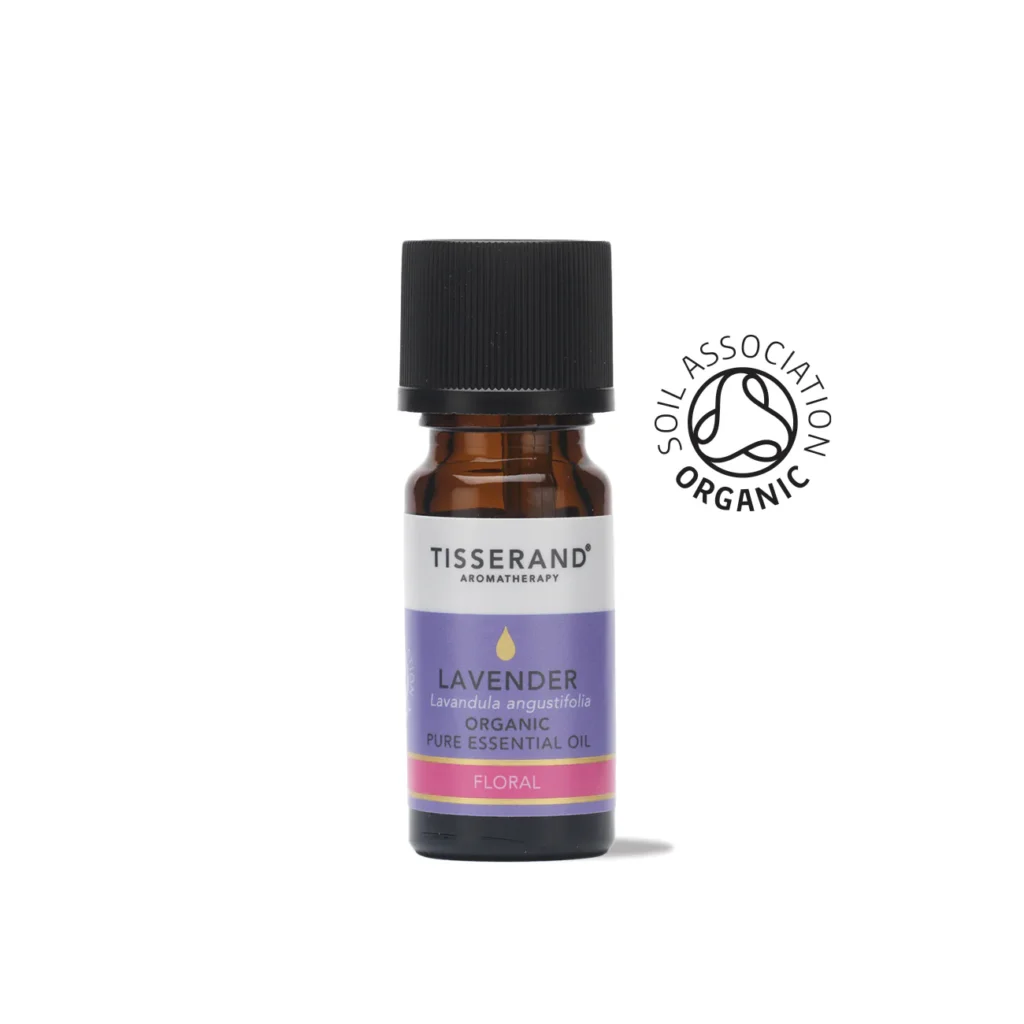
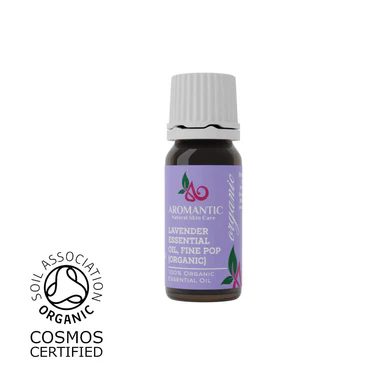
Why it’s a good match: when a barrier is compromised, Lavender essential oil has the longest record of comfortable use on sensitive skin of any oil I keep. It settles redness and reactivity and it’s particularly good in an evening blend. Repair happens mostly overnight and Lavender oil supports this process.
Roman Chamomile — The Gentlest One
Roman Chamomile essential oil is dominated by soft esters rather than anything sharp or terpene-heavy, which makes it one of the lowest-reactivity essential oils available.
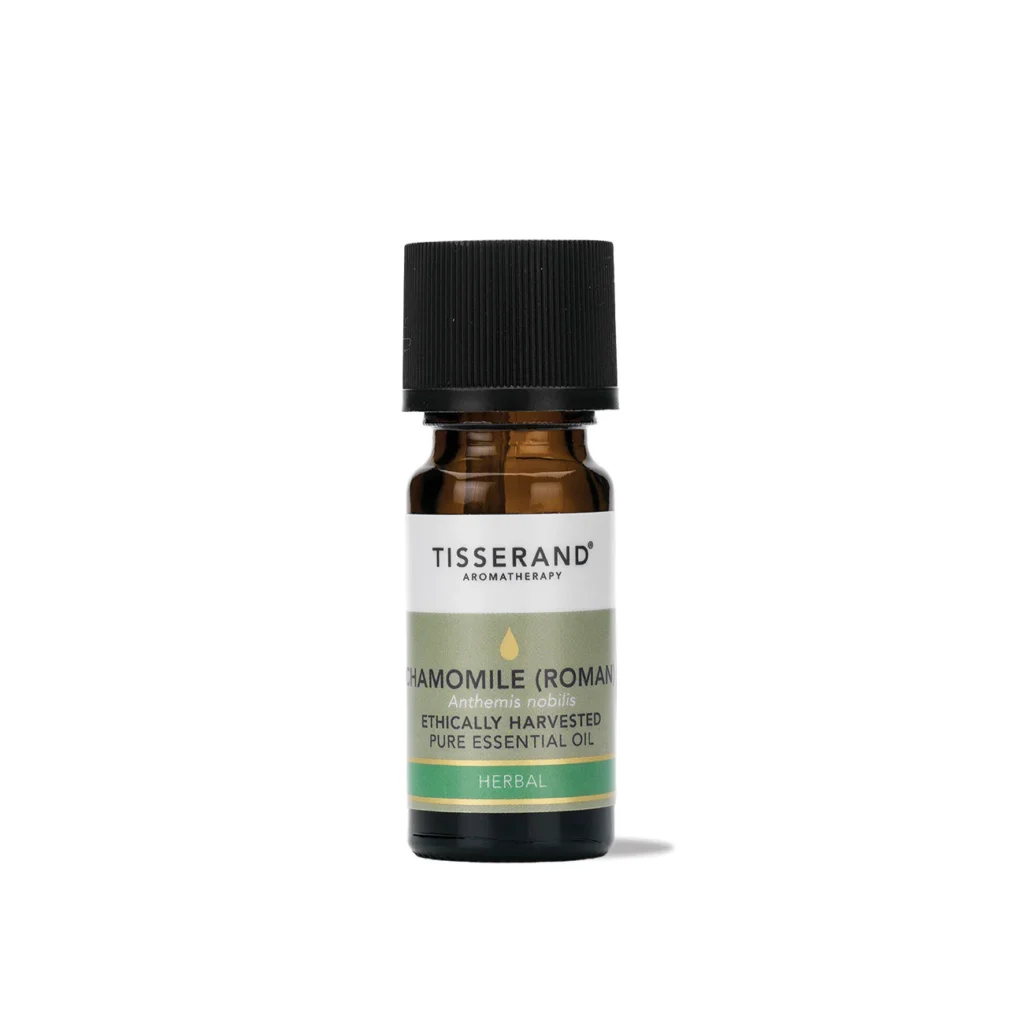
Why it’s a good match: Roman Chamomile oil calms the inflammation. This is the one I reach for when skin is nipping and I want to add something soothing that carries no risk of making it worse.
Helichrysum — The Exceptional One
Helichrysum essential oil owes its reputation to its diketones and neryl acetate, and for skin barrier work it genuinely earns it.
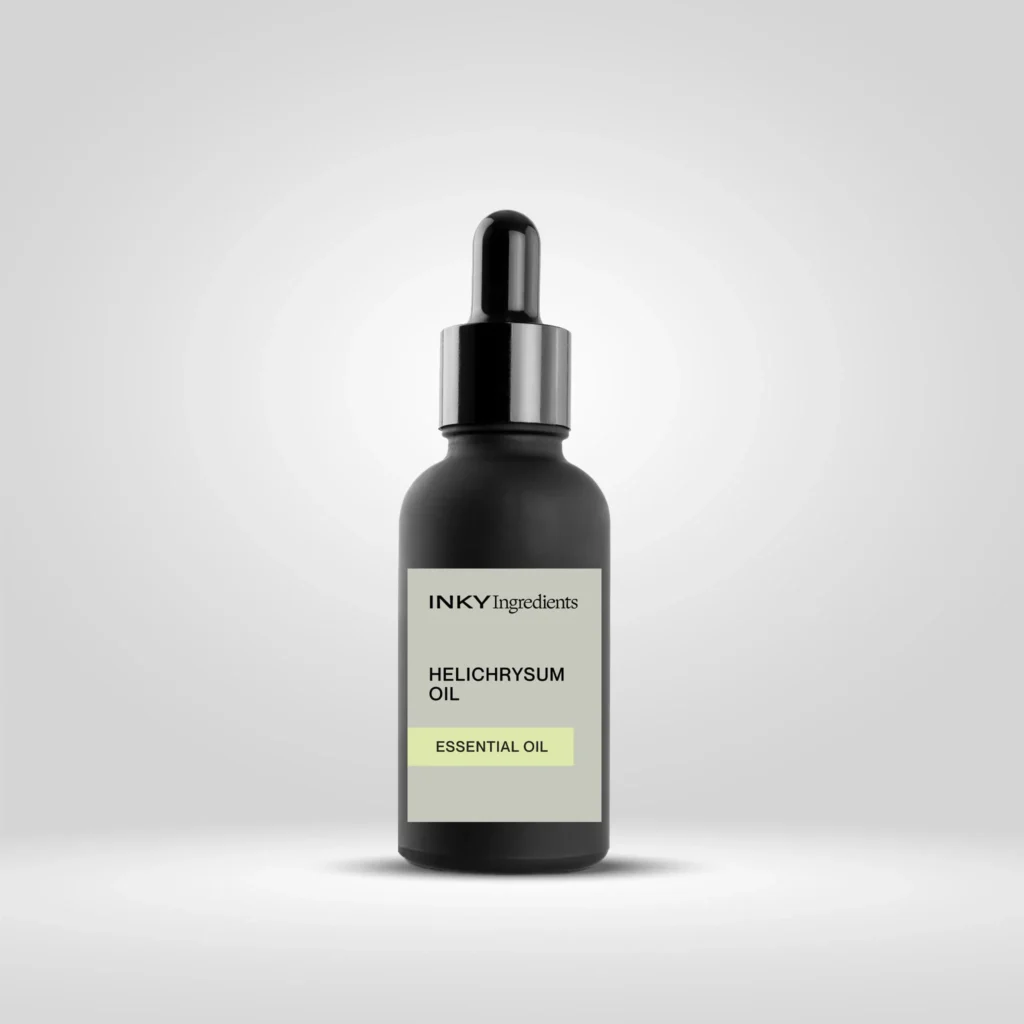
Why it’s a good match: it’s outstanding for skin that’s inflamed and actively repairing, by supporting regeneration in a way few essential oils manage. One drop in a 30ml blend is enough to feel the difference on skin that has been through a long summer.
Frankincense — The Classic for Mature Skin
Frankincense essential oil has been the traditional choice for mature skin for a very long time.
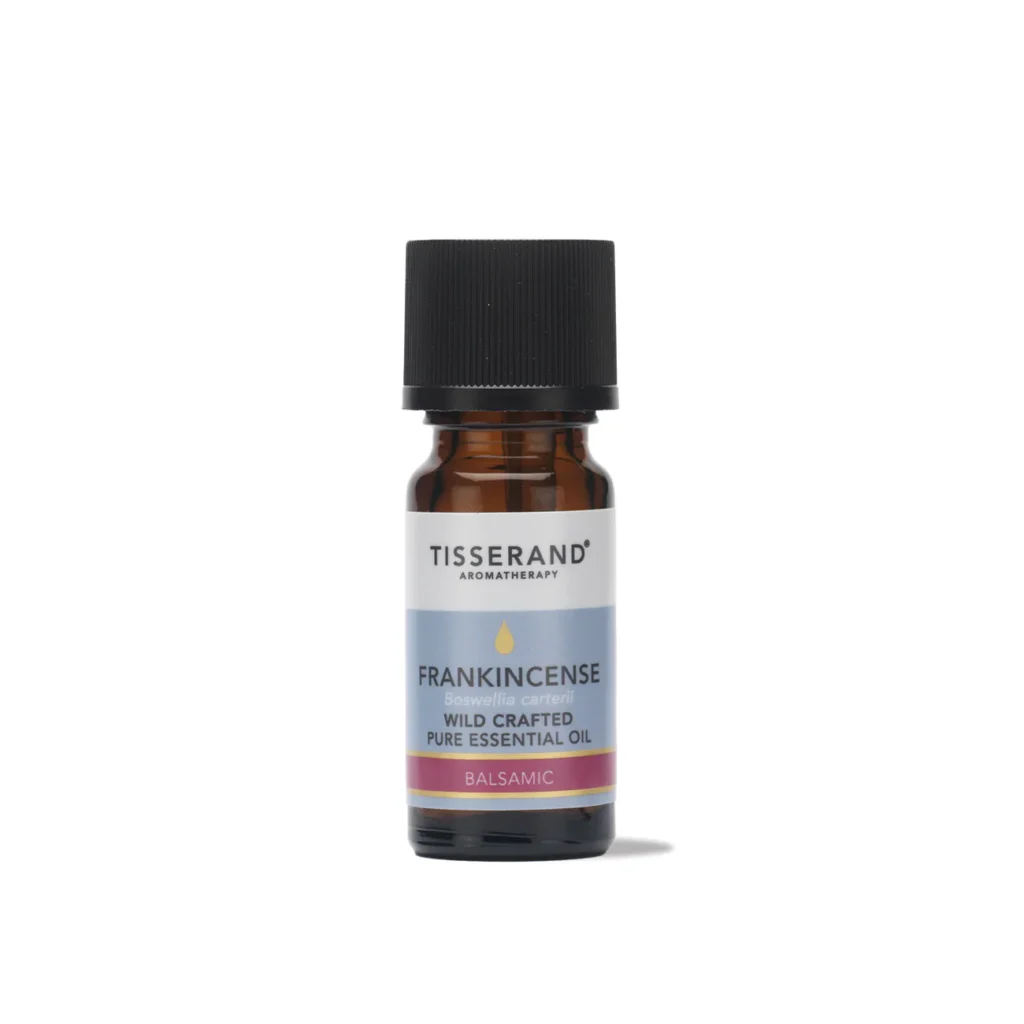
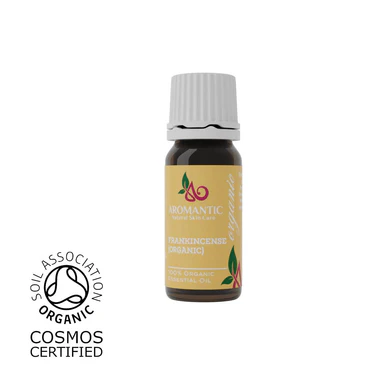
Why it’s a good match: it supports cell regeneration at exactly the point when turnover has slowed and it’s beautifully complementary to the linoleic-rich carrier oils above.
DIY Recipes for Skin Barrier Repair After 40
Barrier Rescue Oil
For skin that’s actively stinging, no essential oils at all. Use this for the first week if anything is nipping.
Ingredients:
- 12ml Squalane
- 10ml Hemp Seed carrier oil
- 5ml Raspberry Seed carrier oil
- 3ml Cranberry Seed carrier oil
- 4 drops Vitamin E
How to make: Pour everything into a 30ml amber glass dropper bottle, cap it tightly and roll it gently between your palms for 30 seconds.
How to use: Apply 3–4 drops to slightly damp skin, morning and evening.
Sun Recovery Facial Oil
This oil is perfect as a repairing treatment to your skin barrier after it’s been exposed to the sun.
Ingredients:
- 10ml Hemp Seed carrier oil
- 8ml Raspberry Seed carrier oil
- 6ml Squalane
- 4ml Prickly Pear Seed carrier oil
- 2ml Cranberry Seed carrier oil
- 4 drops Vitamin E
- 3 drops Lavender essential oil
- 2 drops Roman Chamomile essential oil
- 1 drop Frankincense essential oil
How to make: Combine the carrier oils first in 30ml amber glass dropper bottle, add the Vitamin E, then the essential oils last. Roll gently between your palms rather than shaking. Leave it to rest for 24 hours before first use so blends genuinely settle and smell rounder after a day.
How to use: Apply 3–4 drops to damp skin, morning and evening.
What to Avoid While You’re Repairing
- Exfoliating the flakiness. The single most common mistake, and it sets recovery back by a fortnight every time.
- Oleic-heavy oils — coconut, sweet almond, olive, avocado. Lovely oils, wrong moment.
- Foaming cleansers. Surfactants strip what little lipid you have left.
- Hot water. Lukewarm and brief.
- Acids, retinoids and scrubs for at least a fortnight.
- Increasing your essential oil percentage because it doesn’t seem to be doing much. On permeable skin, that’s how a repairing barrier becomes an irritated one.
- Don’t stop your SPF. Compromised skin is more UV-vulnerable, not less. If your usual formula stings, switch to a mineral filter for a couple of weeks rather than going without.
Final Thoughts
Unfortunately every day sun exposure during summer months comes with a cost for our skin, especially when you’re older. The great thing is that you have excellent tools provided by nature to rebuild it. Give your skin the oils rich in linoleic acid with some gentle and restoring essential oils and let it rebuild at its own pace. It’s important to do it before cold weather arrive so your skin can withstand the seasion of winds and low temperature.
Please leave a comment below about what do you use for skin barrier repairing, I’d love to hear from you.
Disclaimer: This post contains affiliate links. If you purchase through these links, I may earn a small commission at no extra cost to you — it helps me keep creating free content. I only ever recommend products I personally use and trust. This information is for educational purposes only and is not intended to diagnose, treat, cure, or prevent any disease. Always patch test new ingredients, and consult with a healthcare provider if you have specific skin conditions or concerns. If you’re pregnant, nursing, or on medication, check with your doctor before using essential oils.