Lemon Essential Oil for Skin Brightening: What You Need to Know Before You Try It
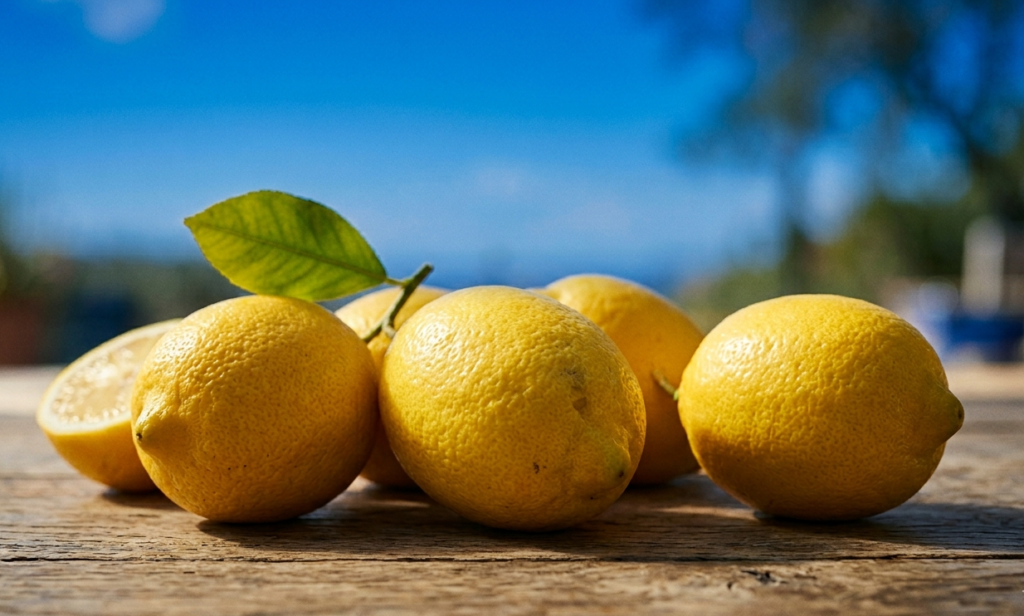
I’ve wanted to write about Lemon essential oil for brightening skin complexion for some time. I’m one of those who use this wonderful essential oil on a daily basis without any side effects and with always amazing results. It helps me to even out skin tone after holiday and tackles winter dullness. I love how quickly, normally during 2 or 3 weeks, Lemon essential oil lightens up my skin complexion and return natural glow to the skin.
Lemon essential oil has a “clean, bright” reputation in natural beauty, and it’s often promoted as a shortcut to glowing, even-toned skin. Because it is highly concentrated in active compounds, it can genuinely help with dullness, dark spots, and post-acne marks—but it can just as easily cause burns and worse pigmentation if used incorrectly.
So if you’ve been curious about adding Lemon essential oil to your brightening routine, but aren’t sure where to start — or whether it’s even safe — this guide is for you. We’re going to cover everything: the science behind how it works, the risks you genuinely need to know about, how to use it safely, the best carrier oils to pair it with, and some DIY recipes you can try at home. By the end, you’ll have a clear, confident picture of whether Lemon essential oil belongs in your skincare toolkit.
By the way, I have already mentioned Lemon essential oil in my older post Essential Oils for Age Spots & Hyperpigmentation After 40: Natural Radiance for Mature Skin. It’s definitely worth checking out if you suffer with hyperpigmentation and are looking for natural solutions.
What Does “Skin Brightening” Actually Mean?
Before we dive into Lemon essential oil specifically, it’s worth clarifying what we mean when we talk about skin brightening. The term gets thrown around a lot and it doesn’t always mean the same thing.
In skincare, “brightening” usually refers to two things:
- Making the skin look more even in tone by reducing visible dark spots, patches, and post-inflammatory marks.
- Improving surface radiance by smoothing texture, managing excess oil, and supporting gentle exfoliation.
Skin brightening does not mean bleaching your natural skin colour, and it should never involve damaging or stripping the skin barrier.
Natural brightening strategies aim to:
- Slow down or regulate excess melanin production in overactive areas.
- Support cell turnover so pigmented, dull surface cells shed more efficiently.
- Protect the skin from oxidative stress that can trigger or deepen pigmentation.
This is where Lemon essential oil comes in—it sits at the intersection of antioxidant protection, mild exfoliation support, and pigment-regulating activity.
What Is Lemon Essential Oil?
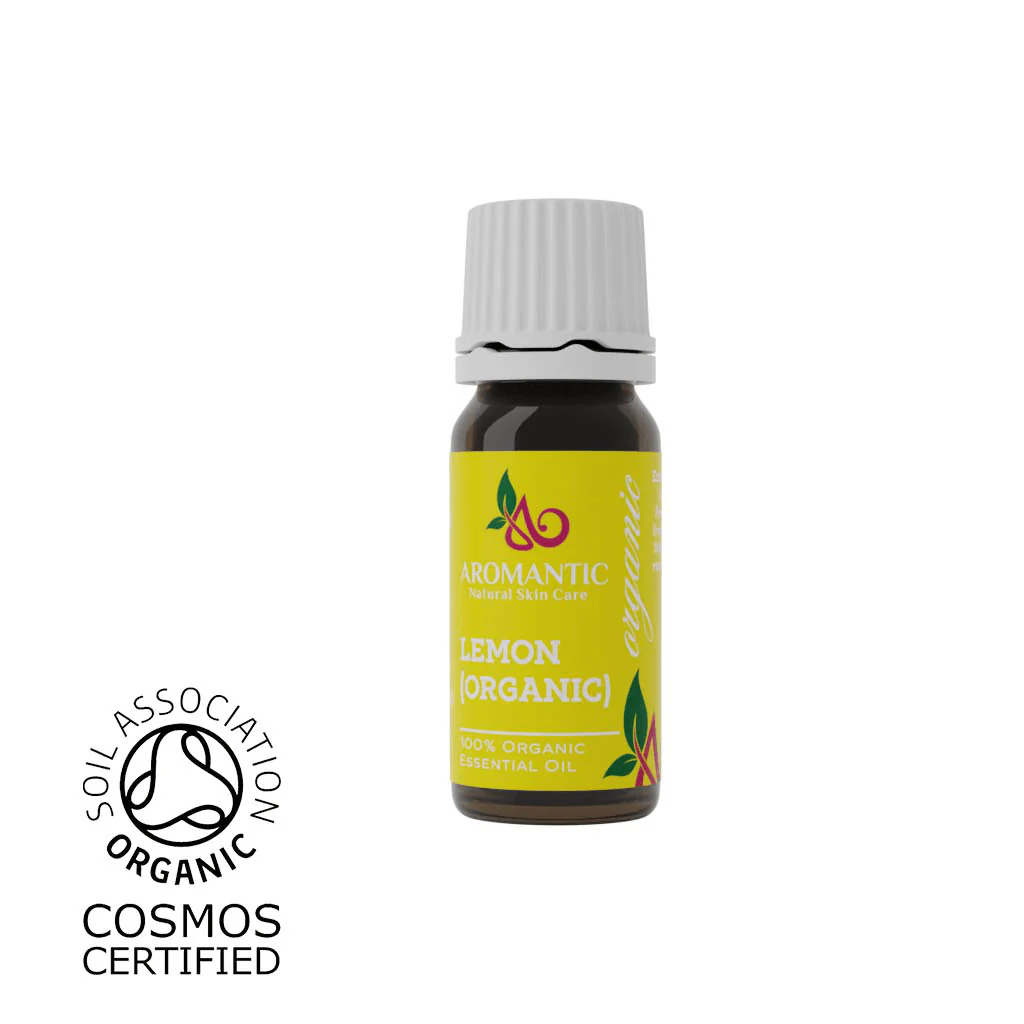
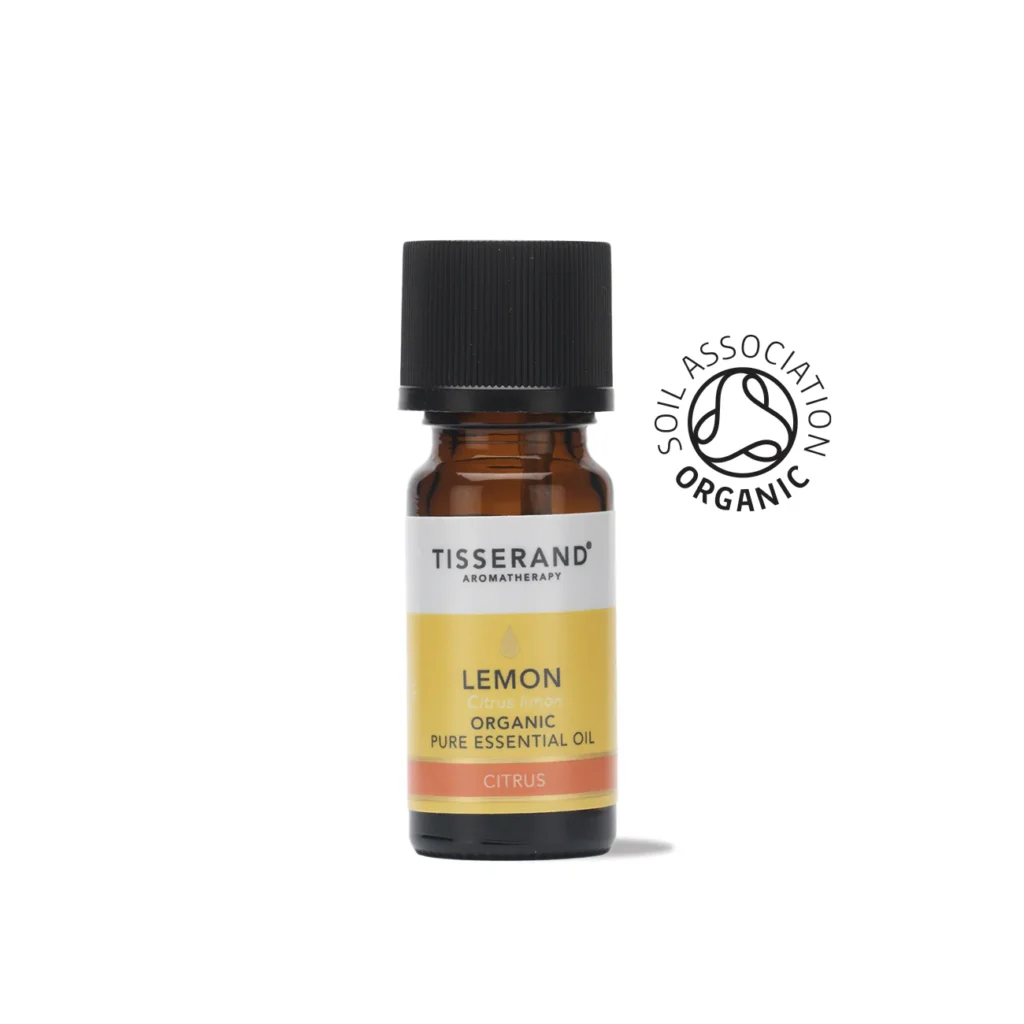
Lemon essential oil is a volatile aromatic oil extracted from the rind (peel) of lemons, typically by cold pressing, though steam-distilled versions also exist. It takes a large amount of peel to produce a small amount of oil, which means the aromatic and active compounds are extremely concentrated compared with lemon juice.
Chemically, Lemon essential oil is dominated by:
- Monoterpenes such as limonene, β‑pinene and γ‑terpinene, which give its fresh, citrus aroma and antioxidant, degreasing properties.
- Smaller amounts of citral (a mix of neral and geranial), which contributes to antimicrobial and surface-renewing effects.
- In cold-pressed oil, furocoumarins (like bergapten), which are responsible for phototoxic reactions under UV light.
These components give Lemon essential oil its appeal in brightening and clarifying skincare—but they also explain why it must be handled with real respect.
Why Lemon Essential Oil Is a Powerful Tool for Skin Brightening
You might wonder why, with so many high-tech brightening serums on the market, anyone would turn to a simple citrus oil. The answer lies in its unique combination of properties that target the three main enemies of a bright complexion: overactive melanin production,skin buildup and oxidative stress.
1. It contains natural tyrosinase inhibitors. Citral, one of Lemon essential oil‘s key components, has been studied for its ability to inhibit tyrosinase, the enzyme responsible for triggering melanin synthesis. When tyrosinase is inhibited, the cascade of events that leads to melanin overproduction is interrupted at its source. This is the same mechanism targeted by many conventional brightening actives like kojic acid and arbutin — Lemon essential oil simply achieves a gentler version of this via its natural chemistry.
2. Limonene supports cellular turnover. D-limonene has shown mild exfoliating properties at a cellular level, which means it can help encourage the shedding of surface skin cells that are already pigmented. Think of it as gently nudging your skin to renew itself faster, so that hyperpigmented cells are replaced more quickly with new, evenly-pigmented ones.
3. It’s rich in antioxidants. Oxidative stress is a significant driver of hyperpigmentation, particularly in mature skin. UV exposure generates free radicals that, among other damage, trigger inflammatory pathways that stimulate melanin production. The antioxidant compounds in Lemon essential oil help neutralise these free radicals by providing a degree of preventative protection against further discolouration.
4. It has a clarifying, pore-refining effect on oily skin. For those whose uneven skin tone is linked to congestion, post-acne marks or excess sebum production, Lemon essential oil‘s astringent properties can help reduce the underlying congestion that contributes to PIH, which stands for Post Inflammatory Hyperpigmentation.
How Lemon Essential Oil Works: The Mechanism Behind the Results
To understand why lemon essential oil is so effective for hyperpigmentation, we need to look at the “melanogenesis” pathway—the process by which our skin creates pigment.
The star of this show is an enzyme called Tyrosinase. When your skin is stressed (by the sun or injury), Tyrosinase is activated. It converts the amino acid tyrosine into melanin, which is then transported to the surface of the skin. Hyperpigmentation occurs when this process goes into overdrive in specific spots. Recent dermatological research has confirmed that certain compounds in Lemon essential oil act as Tyrosinase inhibitors. By binding to the enzyme or interfering with its activation, these compounds effectively “turn down the volume” on melanin production.
In addition to that, Lemon essential oil has a few other properties that makes it effective at improving skin tone:
- Antioxidant protection: The antioxidants in Lemon essential oil can help neutralise oxidative stress from UV, pollution and inflammation, indirectly calming pigmentation triggers.
- Mild exfoliation support: Lemon essential oil is sometimes described as having light exfoliating properties when used appropriately. By supporting more regular shedding of surface cells, pigmented keratinocytes at the top of the skin are removed more efficient.
- Antimicrobial and anti-inflammatory support: Lemon essential oil’s antimicrobial qualities can help with acne-prone areas where ongoing breakouts repeatedly trigger new marks.
What makes Lemon essential oil interesting from a formulation standpoint is that these mechanisms are relatively gentle and cumulative. You’re not bleaching your skin. You’re nudging the skin’s own renewal and regulation processes in a more balanced direction. That gentleness is also why consistency and patience are essential — this is not an overnight fix.
The Risks of Using Lemon Essential Oil on Skin
If Lemon essential oil is so effective, why isn’t it in every skincare product? Here are the main risks and reasons why Lemon essential oil should be used with great care.
- Phototoxicity (photosensitivity): Cold‑pressed Lemon essential oil can contain furocoumarins that become highly reactive when exposed to UV light. Applying it to the skin and then going into the sun (or a tanning bed) can cause intense “exaggerated sunburn” reactions: redness, burning, blistering, followed by long-lasting hyperpigmentation.
- Irritation and sensitisation: Lemon essential oil can cause stinging, redness, dryness and itching, especially on sensitive or already inflamed skin. Repeated overuse can contribute to contact sensitisation—meaning the skin becomes increasingly reactive to the oil over time.
- Barrier damage and rebound pigmentation: If Lemon essential oil is used too strong or too often, it can compromise the skin barrier. A weakened barrier is more vulnerable to inflammation and UV damage, which are both major triggers for more pigmentation, not less. Ironically, careless use in the name of “brightening” can leave you with darker, more stubborn patches than when you started.
Note on steam-distilled Lemon oil: There is a steam-distilled version of Lemon essential oil which has significantly less phototoxic than the cold-pressed version. If you’re choosing Lemon essential oil specifically for daytime skincare use, a steam-distilled (or furocoumarin-free (FCF) version) is the safer choice.
How to Use Lemon Essential Oil Safely on Skin
- Always dilute. Lemon essential oil should never be applied neat (undiluted) to skin. A safe dilution for facial use is 0.5–1%, that’s approximately 3–6 drops of essential oil per 30ml of carrier oil or product. For body use (where skin is less sensitive), up to 2% is generally considered acceptable.
- Use it as a night-time treatment only (if using cold-pressed). Apply your Lemon essential oil blend in the evening, after cleansing, and before bed. Ensure at least 12 hours between application and sun exposure.
- Always follow with SPF. Even if you’re using Lemon essential oil only at night, UV protection in the morning is non-negotiable when you’re working on hyperpigmentation. Sun exposure will actively undo any brightening work and re-trigger melanin production in the areas you’re trying to treat. A broad-spectrum SPF 30–50 applied every morning is essential.
- Patch test first. Apply your diluted blend to the inside of your wrist or elbow, leave for 24–48 hours and check for any reaction before applying to your face.
- Introduce gradually. Start 2–3 times per week, observe how your skin responds and increase frequency from there only if your skin is tolerating it well.
- Avoid open wounds, active breakouts, or compromised skin. Wait until the skin is intact and not actively inflamed.
The Best Approach to Use Lemon Essential Oil Effectively for Skin Brightening
Using Lemon essential oil well is about more than just diluting it correctly. Here’s how to integrate it effectively into a brightening routine:
- Pair it with a gentle exfoliant. Since part of Lemon essential oil‘s brightening mechanism involves cellular turnover, supporting this with a mild chemical exfoliant — such as a low-concentration AHA (alpha hydroxy acid) toner or a gentle enzyme mask used once weekly — can significantly enhance results. Exfoliated skin also absorbs oil blends more effectively.
- Be consistent, but not excessive. Aim for nightly use (or 4–5 nights per week) over a minimum of 6–8 weeks before evaluating results. Hyperpigmentation takes time to shift because skin renewal cycles are approximately 28 days long (longer in mature skin). Allow at least two full skin cycles before drawing conclusions.
- Focus on targeted application. Rather than applying your Lemon essential oil blend all over the face, consider using it as a targeted treatment on specific areas of discolouration: dark spots, post-acne marks, sun-damaged areas, etc.
Best Carrier Oils to Use with Lemon Essential Oil for Skin Brightening
The carrier oil you choose matters enormously not just as a vehicle for dilution, but as an active partner in the brightening process. These are the best options:
- Rosehip Seed Oil is arguably the gold-standard pairing. Rich in provitamin A carotenoids, essential fatty acids (particularly linoleic acid), and antioxidants, Rosehip seed oil is clinically supported for improving hyperpigmentation and uneven skin tone. It enhances cell turnover, supports skin barrier repair and complements Lemon essential oil‘s brightening mechanisms beautifully.
- Sea Buckthorn Oil is extraordinarily rich in carotenoids, vitamins C, E and flavonoids. It has its own brightening and antioxidant properties. It should be used sparingly though, at around 5–10% of your blend, as it has an intense orange colour that can temporarily stain the skin.
- Jojoba Oil is technically a liquid wax, rather than an oil, and it closely mimics the skin’s natural sebum. It’s non-comedogenic, shelf-stable, lightweight and easily absorbed. It makes an excellent base for any brightening blend and is suitable for all skin types, including oily and acne-prone.
- Sweet Almond Oil is soothing, rich in vitamins E and B. It has a slightly emollient texture that works well for all skin types. It supports skin softness and hydration while Lemon essential oil works on the pigmentation.
DIY Lemon Essential Oil for Skin Brightening Recipes
Note: Always patch test any new blend on the inside of your wrist for 24–48 hours before applying to your face. Introduce one new blend at a time so you can identify the source of any reaction clearly.
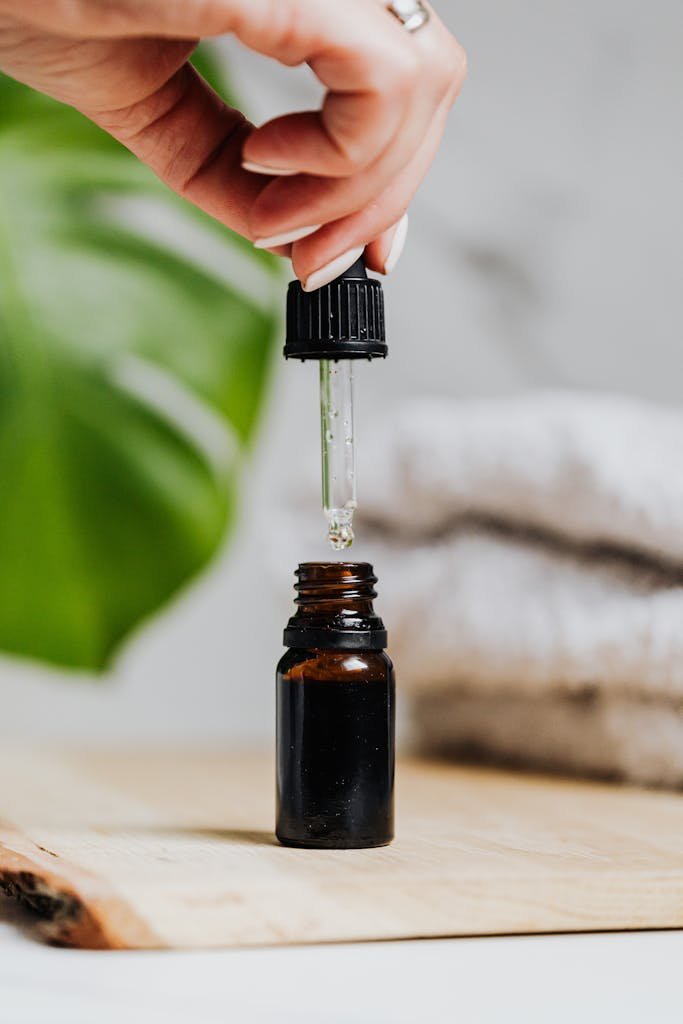
Night Brightening Facial Serum
- 30ml Rosehip Seed carrier oil
- 30ml Jojoba carrier oil
- 10 drops Lemon essential oil
- 4 drops Frankincense essential oil
- 4 drops Carrot Seed essential oil
Method: Combine all oils in a dark glass dropper bottle. Shake gently before each use. Apply 4–6 drops to clean skin each evening, avoiding the eye area. Follow with your regular night moisturiser. Do not use within 12 hours of sun exposure.
Body Brightening Oil
- 50ml Sweet Almond carrier oil
- 15 drops Lemon essential oil
- 10 drops Geranium essential oil
- 5 drops Turmeric essential oil
Method: Blend in a dark glass bottle. Massage into damp skin after your evening shower. Allow to absorb before sleeping. Do not apply before sun exposure.
Brightening Face Mask Booster
- 1 tablespoon Kaolin clay
- 1 teaspoon Rosehip seed oil
- Rosewater (approximately 1–2 teaspoons)
- 1 drop Lemon essential oil
- 1 drop Helichrysum essential oil
- 1 drop Turmeric essential oil
Method: Mix the clay and rosewater together to form a smooth paste. Stir in the Rosehip oil and essential oils. Apply to clean skin, leave for 8–10 minutes without allowing to fully dry and then rinse thoroughly with warm water. Use once a week, only in the evening. Follow with your serum and moisturiser.
Final Thoughts
Lemon essential oil is a remarkable gift from nature, offering a potent, aromatic path to a brighter and more even complexion. Its ability to inhibit tyrosinase, promote exfoliation, and provide antioxidant protection makes it a legitimate contender in the world of natural skincare.
However, its power must be respected. The risks of phototoxicity and skin sensitization are real, but they are entirely manageable with the right knowledge. By sticking to safe dilution limits, using the oil exclusively at night, and pairing it with high-quality carrier oils and daily sun protection, you can harness the “liquid sunshine” of Lemon essential oil to reveal your most radiant skin yet.
So remember to be patient with your skin and prudent with your applications. The glow you seek is found in the consistency and right tools suited for your routine. Have you ever considered to try Lemon essential oil to brighten up your skin? Does it feel less intimidating now? Or maybe you’ve tried it already and want to share your experience? I would love to hear from you, please leave the comments in comments below.
Disclaimer: This post contains affiliate links. If you purchase through these links, I may earn a small commission at no extra cost to you — it helps me keep creating free content. I only ever recommend products I personally use and trust. This information is for educational purposes only and is not intended to diagnose, treat, cure, or prevent any disease. Always patch test new ingredients, and consult with a healthcare provider if you have specific skin conditions or concerns. If you’re pregnant, nursing, or on medication, check with your doctor before using essential oils.