Patchouli Essential Oil for Skin. The Anti-Ageing, Scar-Fading Oil You’ve Been Ignoring
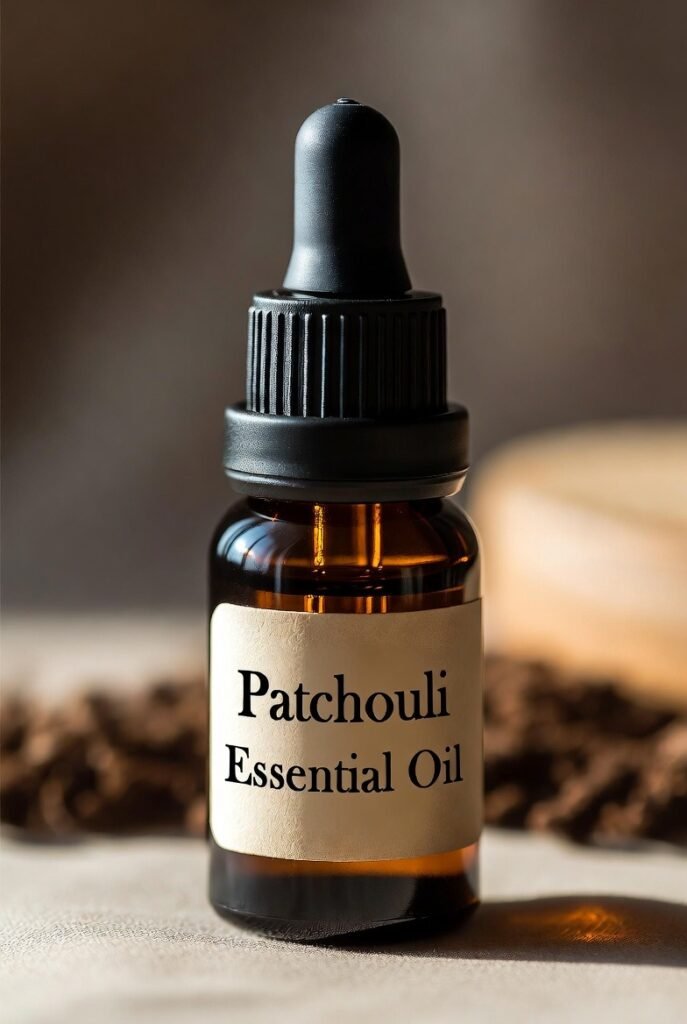
There’s an essential oil sitting quietly on the fringes of the natural skincare world that deserves far more attention than it gets. It regenerates skin cells, fades scars, supports collagen, calms inflammation, and carries one of the most sophisticated scent profiles in the entire world of perfumery. Yet most people wrinkle their nose at the mention of it and move on.
That oil is Patchouli — and if you’ve dismissed it based on reputation alone, this post is about to change your mind.
The Reputation — Why Patchouli Gets a Bad Press
To understand why Patchouli essential oil is so underused in modern skincare, you have to go back to the 1960s.
Patchouli became the signature scent of the counterculture movement — worn heavily by hippies, protesters and festival-goers across America and Europe. It was applied generously, often neat and undiluted, which meant the scent was overwhelming rather than subtle. For an entire generation it became inseparably associated with unwashed bodies, rebellion, and everything their parents considered unrespectable.
The irony is rich. Patchouli essential oil was being used precisely because of its genuine deodorising and antibacterial properties — it was one of the few widely available natural scents, and its extraordinary staying power on skin made it practical for people travelling without regular access to bathing. A single drop lasts hours. Used in excess, neat, it became something else entirely.
That reputation stuck so firmly that mainstream consumers avoided it for decades. Which is precisely why most people have no idea that Chanel’s Coco Mademoiselle, Viktor & Rolf’s Flowerbomb, and Thierry Mugler’s Angel all feature patchouli as a prominent note. The luxury fragrance industry never stopped using it — they simply didn’t advertise the fact. Patchouli has been a cornerstone of high-end perfumery for centuries, valued for its depth, complexity, and unique ability to make other scents last longer on skin.
The counterculture gave it a bad name. The perfumers never listened. And now, with natural skincare finally catching up to what the science has always shown, it’s time for the rest of us to catch up too.
What Is Patchouli Essential Oil?
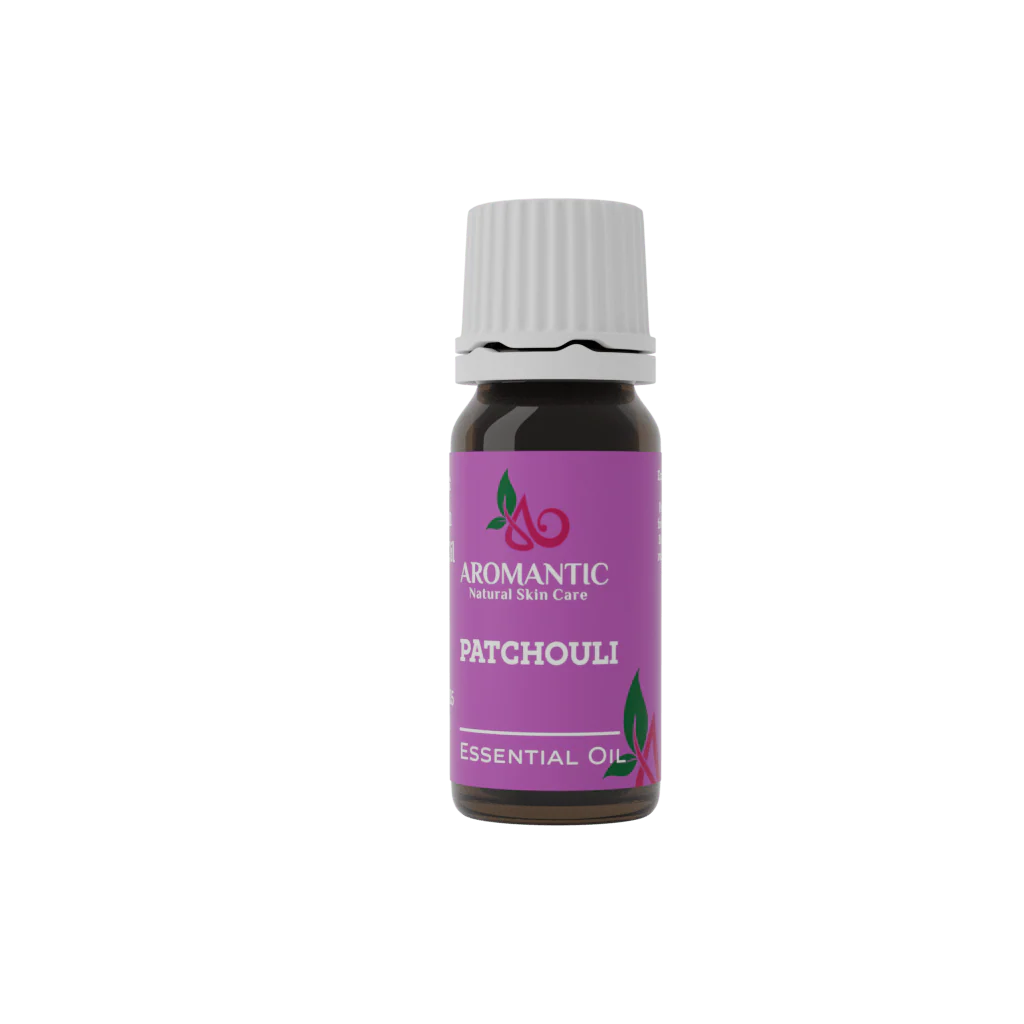
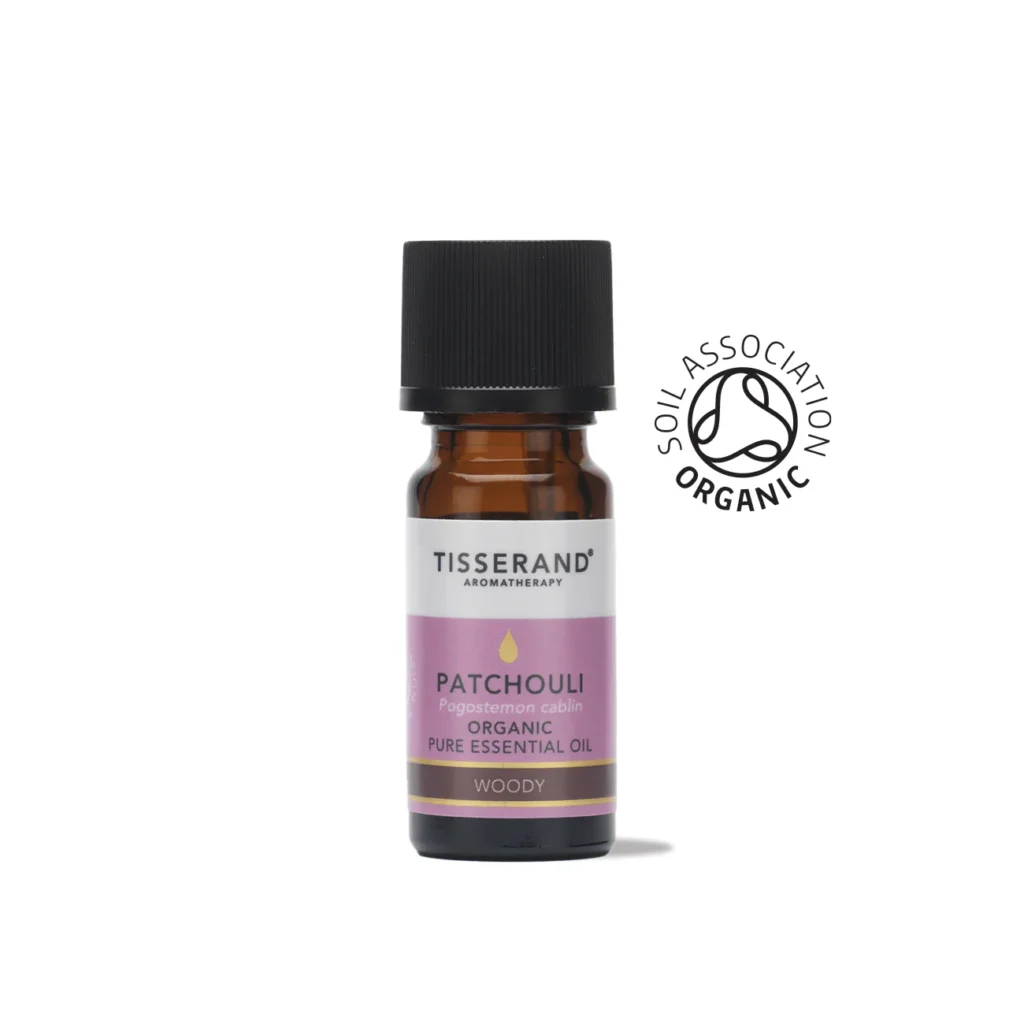
Patchouli (Pogostemon cablin) is a tropical herb belonging to the same botanical family as lavender, mint and sage. Native to Southeast Asia — particularly Indonesia, the Philippines and India — its essential oil is extracted by steam distilling the dried, fermented leaves of the plant.
That fermentation step before distillation is part of what gives patchouli its distinctive depth. Unlike most essential oils, patchouli actually improves with age — the longer it matures, the richer, smoother and more complex the scent becomes. A well-aged patchouli oil is a world away from the sharp, raw version that defined the 1960s.
The oil ranges in colour from pale golden yellow in younger oils to deep amber-brown as it matures. Its scent profile is earthy, woody, slightly sweet and deeply grounding — a base note that anchors and enriches everything around it.
The Properties That Make Patchouli Remarkable for Skin
Patchoulol and Cell Regeneration
The dominant compound in Patchouli essential oil is patchoulol, a sesquiterpene alcohol that gives the oil both its characteristic scent and many of its most significant therapeutic properties. Patchoulol has demonstrated cytophylactic activity — meaning it actively stimulates the proliferation of new skin cells. This is relatively rare among essential oils and is directly relevant to ageing skin, where cell turnover slows significantly from our mid-thirties onwards. Faster cell turnover means fresher, more luminous skin, quicker healing, and a more even complexion over time.
Scar Fader: Cicatrisant Properties
Cicatrisant is a specific term meaning an agent that promotes the healing and fading of scars. Patchouli essential oil is one of a small handful of essential oils that carry this property genuinely and meaningfully. By stimulating new cell growth and supporting the skin’s natural healing cascade, it helps existing scar tissue gradually remodel. It fades post-acne marks, reduces the appearance of age spots and evens out hyperpigmentation over consistent use. This is not an overnight fix, but a slow cumulative improvement that works with your skin’s own biology rather than against it.
Astringent and Pore Refining
Patchoulol causes mild contraction of skin tissue — a gentle astringent effect that tightens pores, firms the skin surface and helps regulate sebum production. For mature skin this translates to improved tone and a subtle lifting effect. For skin that still experiences breakouts or oiliness it helps rebalance without stripping.
Anti-inflammatory
Patchouli essential oil has well-documented anti-inflammatory properties that make it valuable for reactive, sensitised or condition-prone skin. It calms redness, soothes irritation and helps manage flare-ups of conditions like eczema and rosacea. Both become more prevalent during hormonal transitions, when the skin barrier weakens and inflammatory responses increase.
Antioxidant protection
Free radical damage from UV exposure and environmental pollution is one of the primary drivers of skin ageing, because it breaks down collagen, causes pigmentation and dulls the complexion over time. Patchouli’s antioxidant compounds help neutralise this damage so skin looks brighter and ages more slowly.
Fixative quality
In practical terms for DIY skincare, Patchouli essential oil’s fixative quality means that blends containing it last longer on skin and the benefits of companion oils are delivered more slowly and consistently. A small amount goes a very long way, which also makes it excellent value in formulation.
Patchouli for Mature and Menopausal Skin — A Closer Look
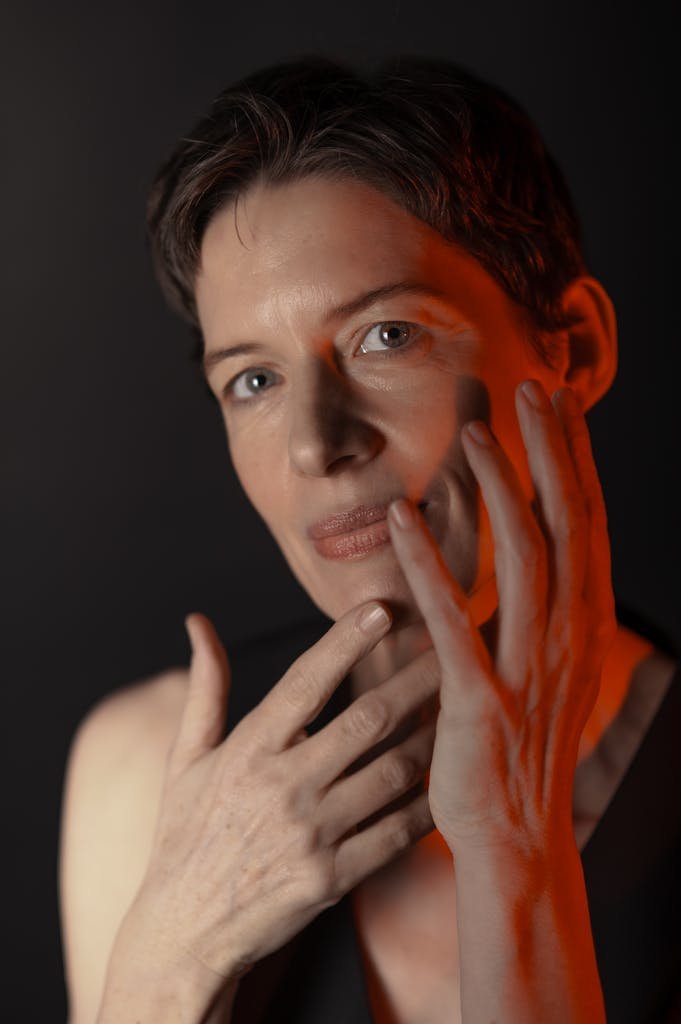
Skin navigating the hormonal transition of perimenopause and menopause is a skin type that stands to benefit the most from Patchouli essential oil.
Here’s why. As oestrogen declines, the skin undergoes a cascade of changes — collagen production drops significantly, the skin barrier weakens, cell turnover slows and inflammatory responses become more unpredictable. As a result the skin simultaneously looks older, feels more sensitive and behaves less predictably than it ever did before. Many women find themselves dealing with breakouts, dryness, and fine lines all at once, a frustrating combination that most conventional skincare addresses only partially.
Patchouli addresses several of these changes at once. Its cell-regenerating properties counteract slowing turnover. Its anti-inflammatory action calms the heightened reactivity that comes with a compromised barrier. Its astringent effect helps maintain tone as collagen declines. And its antioxidant protection supports skin that is increasingly vulnerable to environmental damage as its natural defences weaken.
There is also the hormonal wellness dimension. Patchouli’s grounding, calming effect on the nervous system — experienced through inhalation during topical application — supports the parasympathetic nervous system and helps lower cortisol. I invite you to check my other post How High Cortisol Ages Your Skin, where I explored how chronically elevated cortisol accelerates skin ageing by breaking down collagen, impairing the barrier and slowing cell renewal. You will then understand that an evening facial oil that can simultaneously nourish the skin and calm the stress response is not a small thing. It is addressing the problem from two directions at once.
Patchouli Essential Oil for Scars and Hyperpigmentation
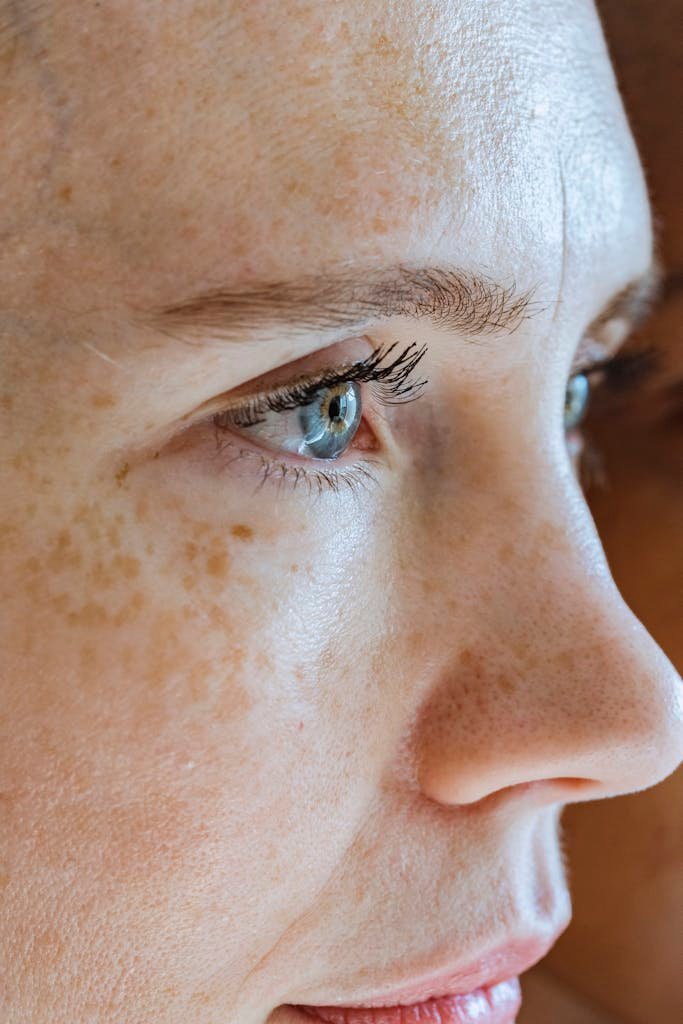
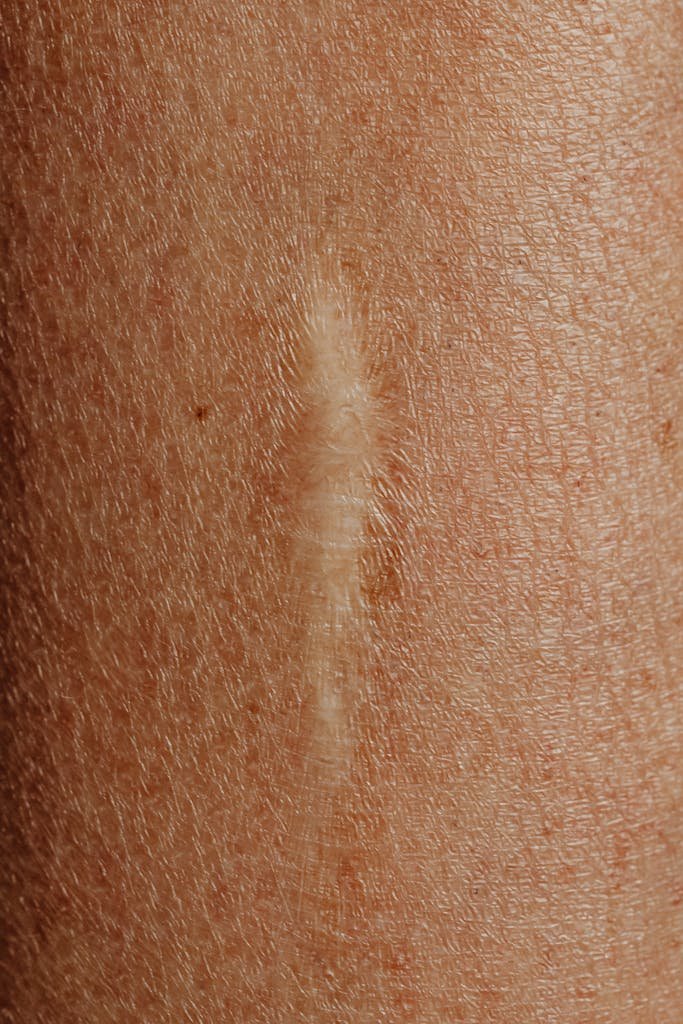
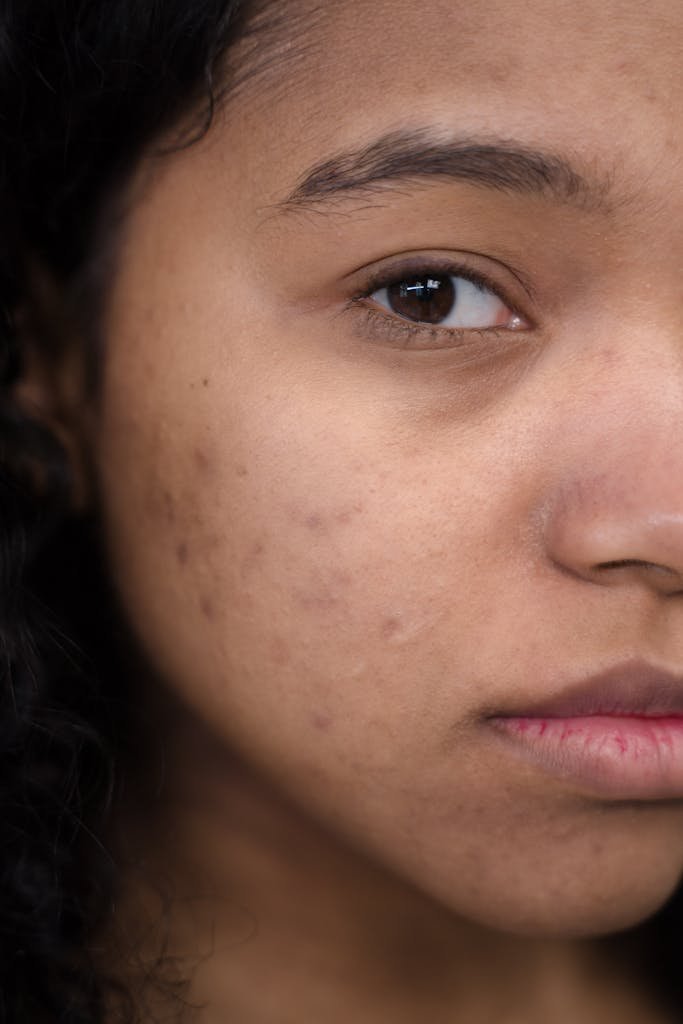
This is perhaps Patchouli’s most underappreciated and distinctive skin benefit — and the one most worth understanding in detail.
Scars and hyperpigmentation form when the skin’s natural healing process produces an uneven distribution of melanin or collagen in response to damage. Post-acne marks, sun spots, age spots and surgical scars all fall into this category. Conventional skincare addresses them primarily through chemical exfoliation and brightening agents, like vitamin C and niacinamide. It’s effective, but often irritating for sensitive or menopausal skin.
Patchouli essential oil works differently. Rather than exfoliating surface pigmentation away, it works at the cellular level by stimulating new cell growth, that gradually replaces pigmented or scarred tissue with healthier skin. It is slower, but significantly gentler and particularly well suited to skin that cannot tolerate aggressive actives.
For best results with scars and hyperpigmentation, consistent daily application matters more than concentration. A 2% dilution applied every evening over several weeks will deliver better results than sporadic use at higher dilutions. Patience is required! But the results, when they come, are genuine improvements rather than surface-level brightening that fades when you stop.
Pair Patchouli essential oil with Carrot Seed essential oil in your formulations for this purpose. Carrot seed essential oil is similarly rich in antioxidants and beta-carotene, and the two oils work synergistically on uneven tone and skin renewal.
How to Use Patchouli Essential Oil on Your Skin
Dilution: For facial use, dilute Patchouli at 1–2% in a carrier oil — approximately 6–12 drops per 30ml. Because of its intensity and fixative quality, less truly is more. Starting at 1% and increasing if desired is the right approach.
Best carrier oils to pair with Patchouli essential oil:
- Rosehip carrier oil — rich in vitamin A precursors and essential fatty acids, ideal for anti-ageing and pigmentation work
- Jojoba carrier oil — lightweight, non-comedogenic, compatible with all skin types
- Sweet Almond carrier oil — nourishing and softening, beautiful for body blends
- Carrot Seed essential oil — powerful antioxidant synergy for scar and pigmentation focus
Scent intensity: Patchouli essential oil is a strong base note. If the scent feels too dominant in your blend, reduce it to 1% and increase lighter top notes like neroli or bergamot to balance. The scent will also soften on skin within minutes of application.
When to use it: Patchouli oil is best suited to evening routines — its grounding, calming scent makes it a natural fit for night-time skin rituals, and its cell-regenerating properties work in harmony with the skin’s natural overnight repair cycle.
Patch test: Always. Apply your diluted blend to the inside of your forearm and wait 24 hours before using on your face.
DIY Recipes
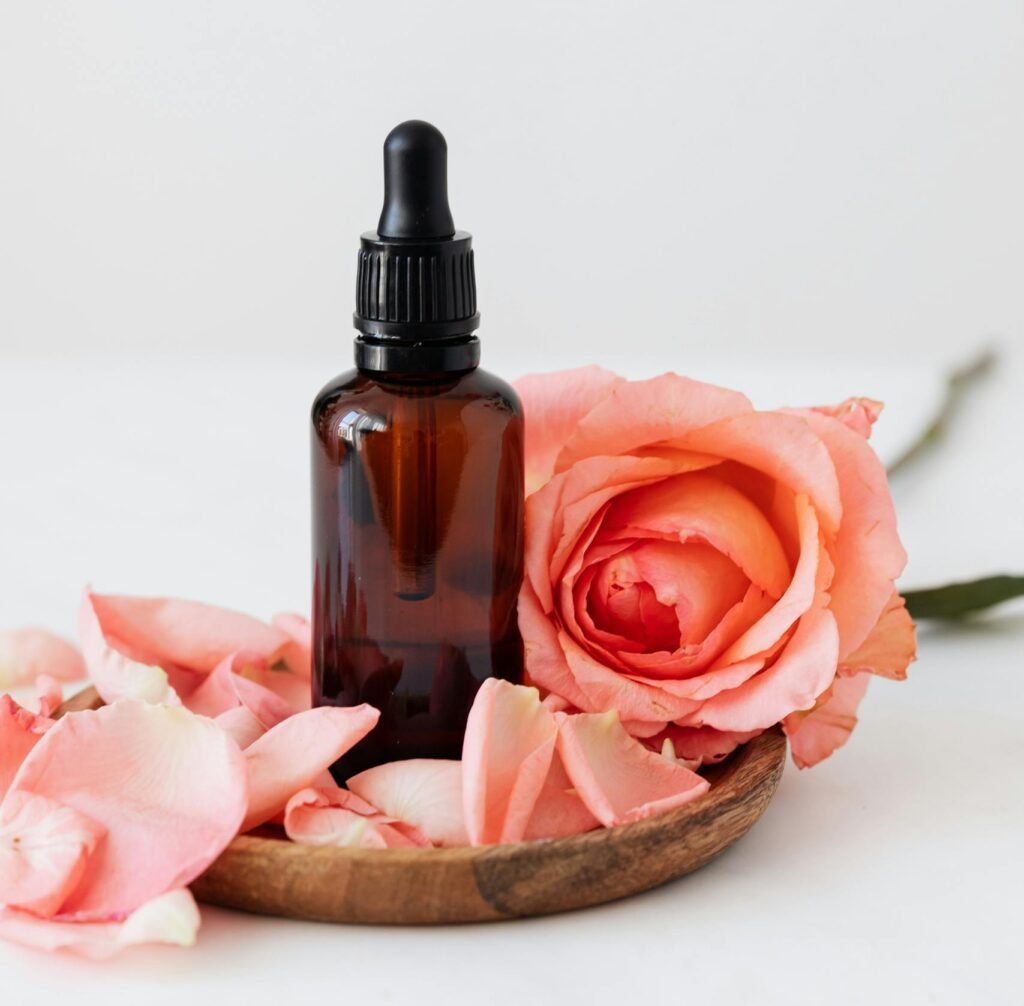
Anti-Ageing Facial Oil
A rich evening facial oil targeting mature and menopausal skin. Supports cell renewal, fades pigmentation and calms inflammation while you sleep.
Ingredients:
- 20ml Rosehip carrier oil
- 10ml Jojoba carrier oil
- 4 drops Frankincense essential oil
- 3 drops Patchouli essential oil
- 2 drops Neroli essential oil
Method: Combine all ingredients in a dark amber glass dropper bottle. Roll gently between your palms to blend. Apply 3–4 drops to clean skin each evening, pressing gently into face and neck. Inhale deeply as you apply. The combined scent of Patchouli, Frankincense and Neroli is genuinely beautiful and deeply grounding.
Shelf life: up to three months. Add one drop of vitamin E oil to extend the shelf life and add benefits.
Scar and Pigmentation Treatment Mask
A weekly treatment mask targeting post-acne marks, sun spots and uneven skin tone. The clay draws out impurities while the oils work on pigmentation at the cellular level.
Ingredients:
- 1 tablespoon Kaolin Clay
- 1 teaspoon Rosehip carrier oil
- 2 drops Patchouli essential oil
- 1 drop Carrot Seed essential oil
- Enough Rose water or plain water to form a paste
Method: Mix clay and water, or Rose water, to a smooth paste. Stir in the Rosehip oil, then add essential oils and combine well. Apply to clean skin, avoiding the eye area. Leave for 10–12 minutes until almost dry — do not allow to dry completely as this can dehydrate the skin. Remove with a warm damp face cloth and follow with your facial oil.
To reinforce the treatment, you can use Brightening Night Serum from my post Essential Oils for Age Spots & Hyperpigmentation.
Use once weekly. Always patch test first.
Grounding Evening Body Oil
A deeply nourishing and cortisol-calming body oil that works as well on your nervous system as it does on your skin. Patchouli oil anchors the blend beautifully and ensures it lasts on skin throughout the night.
Ingredients:
- 50ml Sweet Almond carrier oil
- 10ml Jojoba carrier oil
- 5 drops Patchouli essential oil
- 5 drops Clary Sage essential oil
- 4 drops Lavender essential oil
- 2 drops Frankincense essential oil
Method: Combine all ingredients in a dark glass bottle. Apply generously after an evening shower or bath, focusing on shoulders, neck and décolletage. Breathe deeply and slowly as you massage it in. This blend is designed to be as much a nervous system ritual as a skincare treatment. The combination of Patchouli, Clary Sage and Lavender essential oils is one of the most effective cortisol-calming aromatic profiles available.
You can also use Before-Bed-Cortisol-Calming Body Oil from my cortisol post and alternate between them two depending on your mood.
Safety Notes
- Always dilute. Despite its relatively gentle dermal profile, patchouli should always be used diluted in a carrier oil for skincare. Stick to 1–2% for facial use and up to 3% for body use.
- Patch test first. Essential oils can cause sensitisation over time with repeated neat application — always test a new blend on your forearm before applying to your face.
- Pregnancy. Consult your healthcare provider before using patchouli essential oil during pregnancy or breastfeeding.
- Medication. If you are on any medication or have a chronic health condition, check with your doctor before introducing new essential oils.
- Quality matters. Use only 100% pure, therapeutic-grade Patchouli essential oil from a reputable supplier. Aromantic and Tisserand are an excellent source — their essential oils and carrier oils are consistently high quality and ideal for facial formulations.
- Aged oil is better. If possible, choose a well-aged Patchouli oil — the scent is smoother, less sharp, and significantly more pleasant to work with in skincare blends.
Final Thoughts
Patchouli essential oil is, without question, one of the most unjustly overlooked oils in natural skincare. Its cell-regenerating, scar-fading, collagen-supporting and anti-inflammatory properties give it genuine credentials that most mainstream skincare ingredients would envy.
If you are navigating mature or menopausal skin, and dealing with the combined challenges of slower cell turnover, increased sensitivity, fading collagen and stubborn pigmentation, patchouli essential oil definitely belongs in your routine. Give it a month of consistent evening use in a well-formulated facial oil and I think you’ll be surprised.
Had you heard about Patchouli essential oil before reading this? Or perhaps you’re well familiar with it and would like to share some tips on how to use it? I’d love to know in the comments! And if you try any of the recipes, please come back and tell me how you get on.
Disclaimer: This post contains affiliate links. If you purchase through these links, I may earn a small commission at no extra cost to you — it helps me keep creating free content. I only recommend products I personally use and trust. This information is for educational purposes only and is not intended to diagnose, treat, cure, or prevent any disease. Always patch test new ingredients and consult with a qualified healthcare provider before making changes to your skincare routine.